Tourism is a Living Legacy
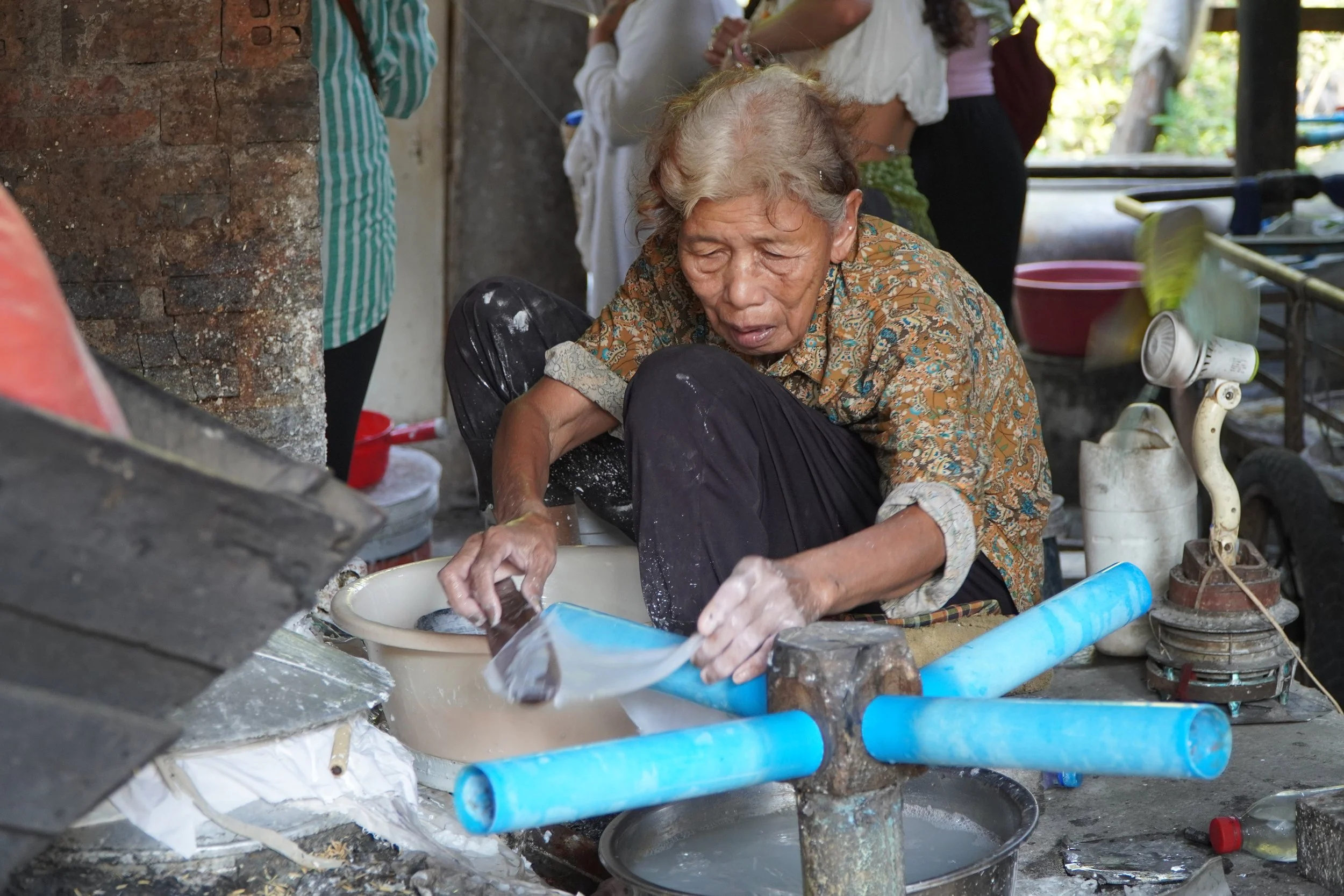
Rice Paper family, Battambang
When talking about legacy, we often look at it as the resources that our ancestors or families have left for us as the new generation.
We call ourselves experience creators. We see everything that travelers experience—from history and ruined temples to the culture and natural resources around us—as part of a legacy. Often, when we speak of legacy, we lean toward the idea that we own it or that it exists solely for us. Because of this, we sometimes fall into the direct or indirect exploitation of these resources.
On the other hand, legacy can also be seen as a responsibility to maintain these resources. We should not only look at legacy as what we receive, but more importantly, as what we need to build. Almost every action we take leaves a trace, and that trace becomes our legacy.
It is truly important to acknowledge and be thankful for what our ancestors and families have left for us. However, it is even more important to think about how we will maintain it and what kind of legacy we want to leave for the next generation after we leave this world.
This may sound general, but our purpose in writing this is to bring these thoughts directly to the attention of travelers and tourism agencies. We encourage the practice of sustainability in order to protect the legacy of tourism for future travelers. At the same time, we need to create new legacies of our own.
We believe tourism leaves an impact, so we encourage everyone, everywhere, to embrace this awareness and put it into action. It is important to look at all elements of travel. One thing we notice is that local communities are often treated as "tourism products." Instead, we want to foster suitable collaborations with local communities, set up proper working procedures to avoid exploitation, and promote intentional, respectful travel.