What makes the monk so special for Cambodian society
When traveling in Cambodia, visitors are often invited to take part in local culture, trying traditional food, visiting markets, and even joining food tours. Many travelers believe that cuisine is an important window into understanding a country’s traditions and daily life.
But beyond food, one of the most fascinating parts of Cambodian culture is the presence of pagodas and Buddhist monks. For many travelers, monks spark curiosity and deep questions, such as:
Why do people become monks?
Who can become a monk?
What is Buddhism, and why is it so important in Cambodia?
This blog won’t answer all of these big questions. Instead, it will walk you through the important roles monks play in Cambodian society, roles that help explain why Cambodians deeply value monks and what monks contribute to the country’s social and spiritual life.
Why this article relates to us
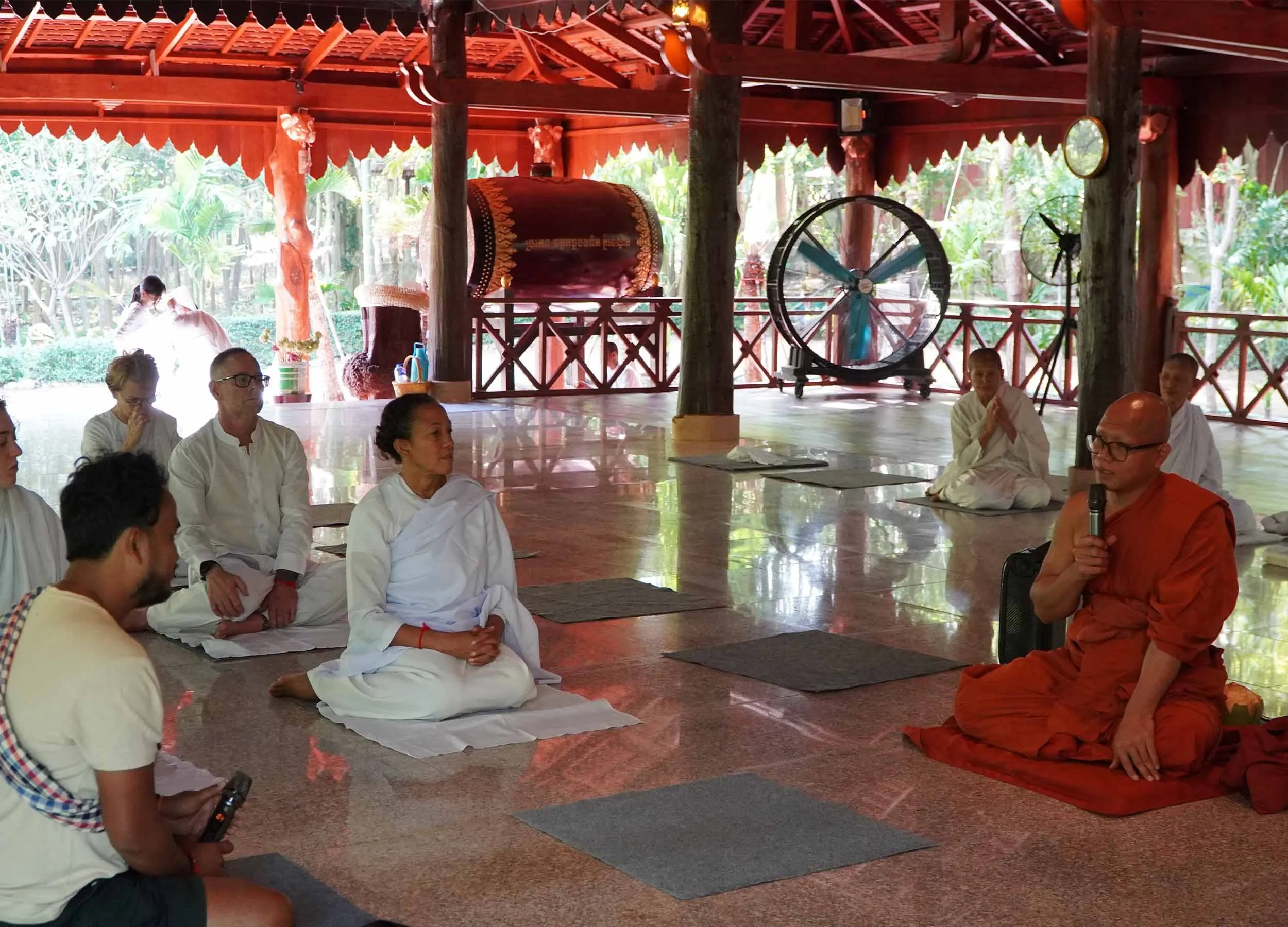
Skual Tours focuses on experiential travel that integrates tourism activities with community connection and mutual learning for both travelers and local people. When you join our tours, we offer meaningful cultural immersion experiences through purposeful and respectful interactions that encourage self-learning and reflection.
On our 12-day Cambodia cultural journey, we invite our guests to spend one night at a local pagoda in Battambang. Our journey begins in Phnom Penh, continues to Battambang, and ends in Siem Reap.
One full day of the journey is dedicated to learning about Cambodian Buddhism, with a focus on pagoda life, Dharma talks, and mindfulness meditation. During our time in Phnom Penh, we don’t only visit historical sites and learn about Cambodian history—we also prepare for pagoda life by learning important cultural knowledge, including pagoda do’s and don’ts, monks’ rules, daily routines, and what accommodation and meals at a pagoda are like.
This creates a meaningful opportunity to learn directly from monks, with our tour leader acting as a facilitator to help bridge understanding and ensure a respectful, enriching experience for everyone involved.
Monks and Traditional Education in Cambodia
Before 1836, pagodas were the main centers of education in Cambodia. They functioned as community schools that provided:
Moral and ethical education based on Buddhist philosophy
Life skills
Vocational training such as carpentry, wooden architecture, furniture making, and house building
Traditionally, many men were expected to ordain as monks for a period of their lives and learn from senior monks. This system was practiced for generations.
During the French protectorate period, modern schools were introduced, and the traditional role of pagodas as the main educational institutions began to decline. Today, only a small number of pagodas still function as traditional learning centers. However, pagoda schools still exist and often follow the national education curriculum to support literacy and general education.
Alongside subjects required by the Cambodian government, pagoda schools continue to teach Buddhist philosophy, as well as classical languages such as Sanskrit and Pali.
Teaching Beyond the Pagoda Walls
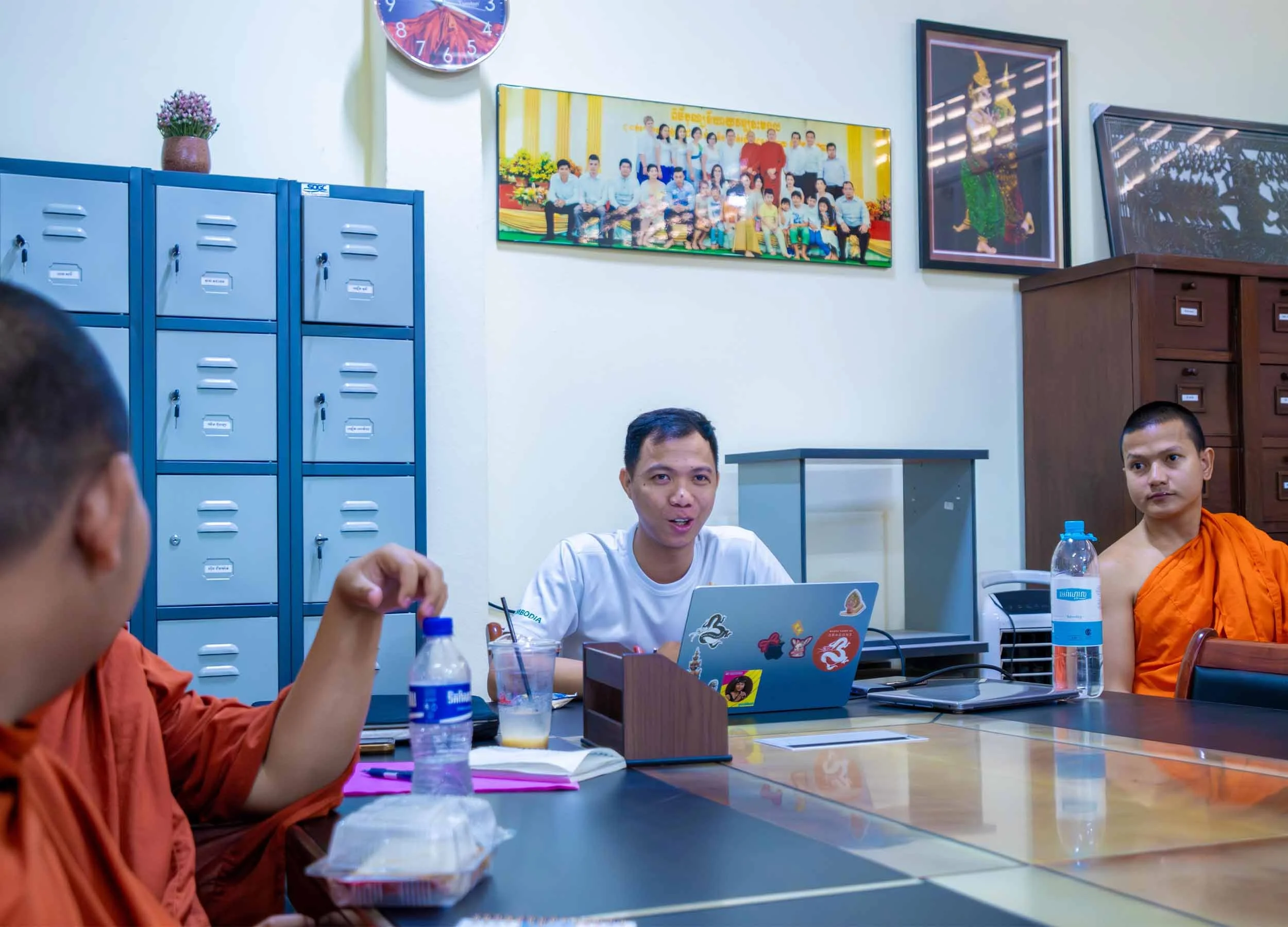
Monks do not only teach inside pagodas. According to Buddhist tradition, monks are encouraged to go beyond the temple to help relieve suffering and guide people toward wisdom. This practice dates back to the time of the Buddha and continues today in many forms.
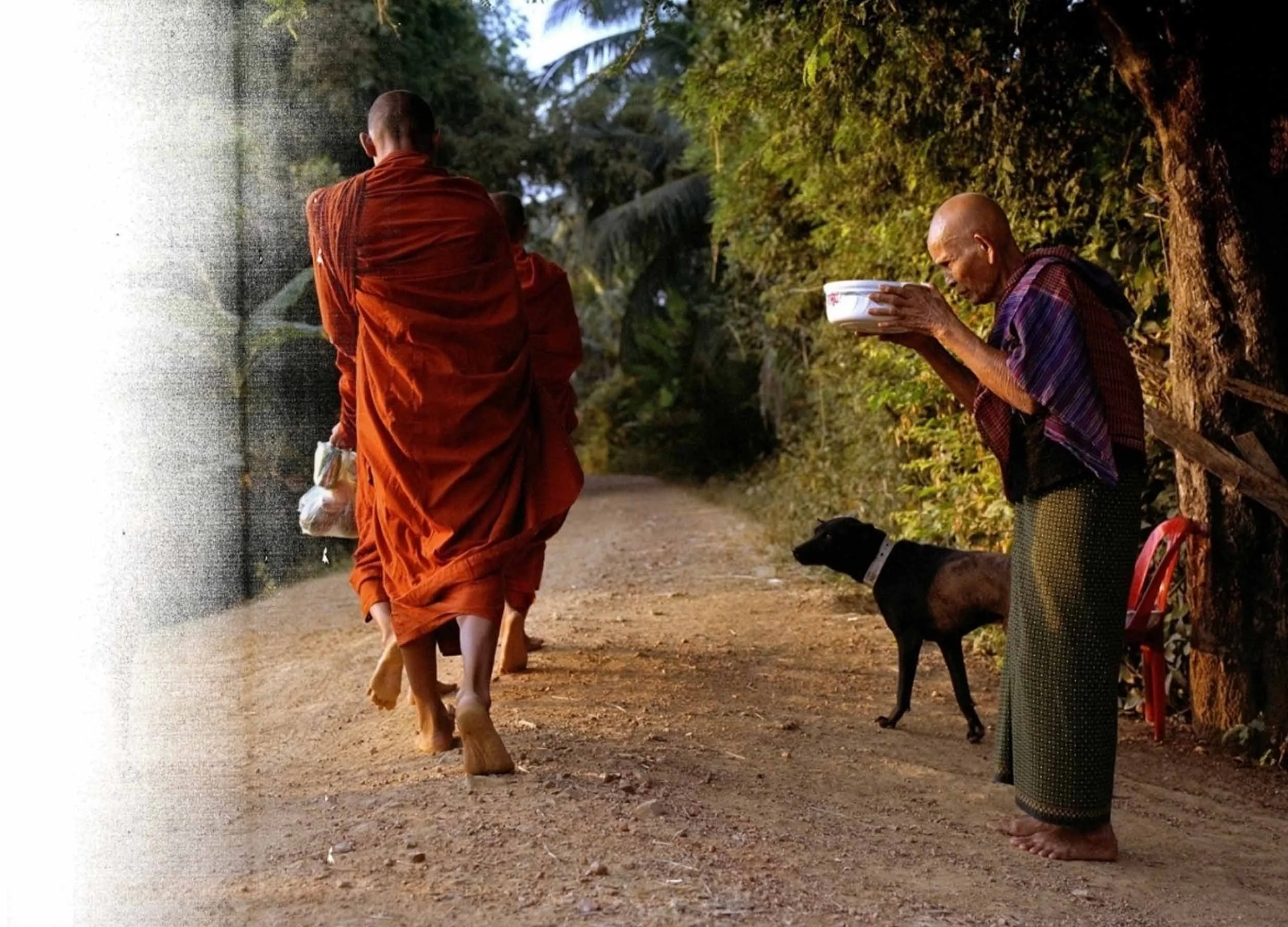
Morning Alms: Teaching Through Presence : Every morning, monks walk through villages to collect food. This is not simply about receiving meals—it is a form of teaching. By offering food, laypeople practice generosity and compassion. Seeing monks reminds people to cultivate kindness and mindfulness in daily life.
Teaching During Community Ceremonies : Monks play important roles in community events such as festivals, weddings, and funerals. During these occasions, monks offer teachings based on Buddhist philosophy. They remind people about impermanence, compassion, and how to live peacefully in the present moment.
Sometimes we may see monks or groups of monks giving Dharma talks. These teachings may be dedicated to different causes, but the purpose is the same: to raise awareness of mindfulness and guide people toward inner peace.
Buddhist teachings emphasize that only the present moment truly exists. People have choices in how they live—toward harmful actions or toward compassionate actions. Without mindfulness and wisdom, it is easier to fall into harmful behavior. Buddhism teaches that the mind is not born wise; wisdom must be cultivated through practice and understanding.
The most important role of a Buddhist monk is promoting peace and avoiding violence. Monks practice this role as social activists and advocates. If we look back at the history of Cambodia, in 1975, Cambodia fell into one of the darkest periods of its history under the Khmer Rouge regime. Nearly a quarter of the population was killed, including many monks. This created deep trauma that still lives in the hearts of many Cambodians today.
When society collapses, people need spiritual and emotional support. This is where monks have played a crucial role in healing and rebuilding communities.
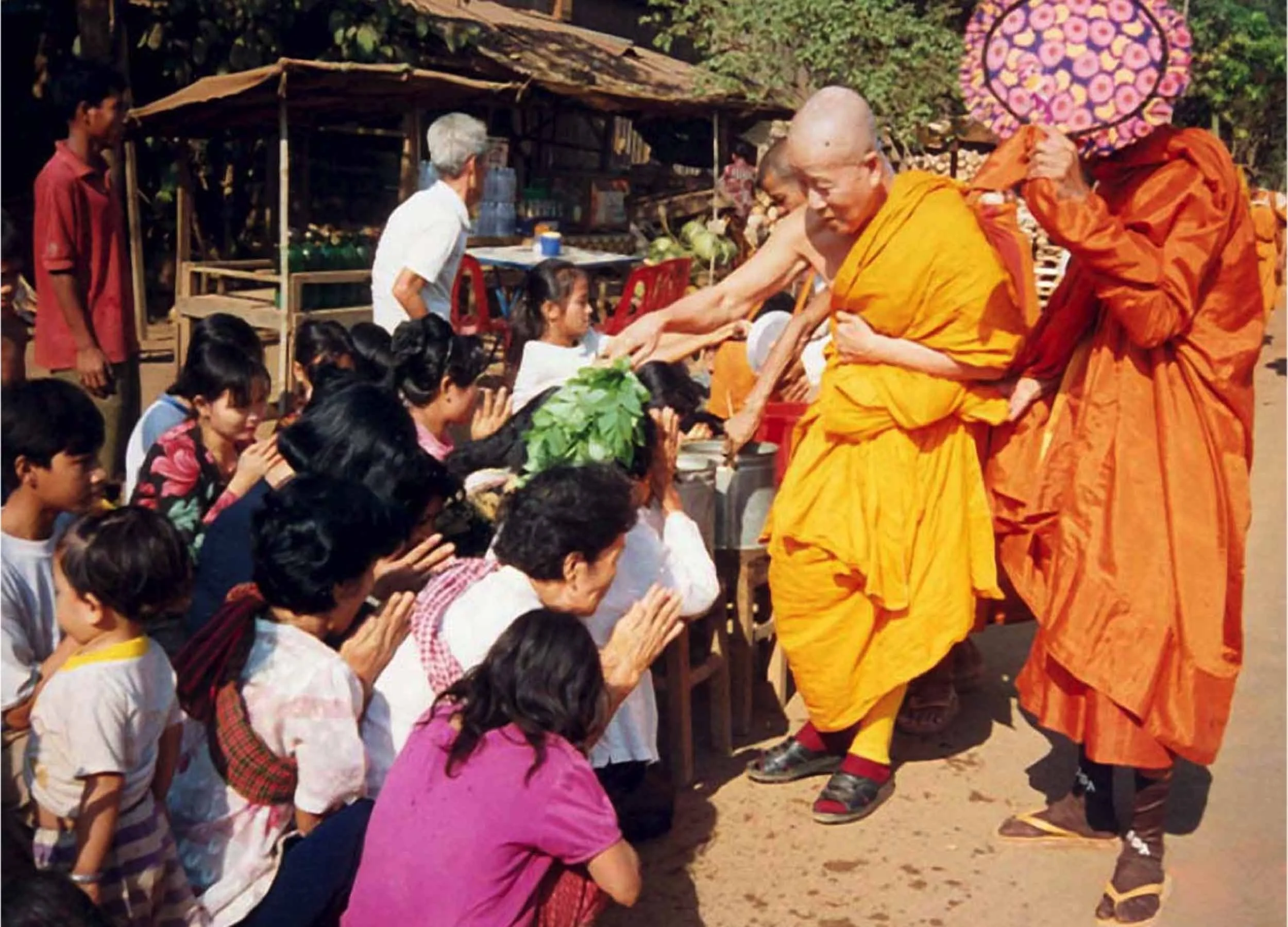
Preah Moha Ghosananda, a Cambodian monk from Takeo Province, went to refugee camps along the Thai-Cambodian border in 1980 after the collapse of the Khmer Rouge to help survivors of the killing fields. He was the first monk many Cambodians saw after living for three years in a dark period of history. During the Khmer Rouge regime, there were almost no monks left in Cambodia. He helped build pagodas in the camps and taught Buddhist philosophy to support people in healing from the wounds of war.
In 1995, he led a peace pilgrimage from the refugee camps back to Phnom Penh, bringing hundreds of Cambodians home. His message was peace and reconciliation. He walked across many villages and battlefields during this pilgrimage. He saw communities torn apart, damaged infrastructure, poverty, lack of basic life support, fields full of landmines, and unsafe conditions everywhere. He also met soldiers from different sides of the conflict and carried their wish for peace across the country. His work later connected with international peace efforts, including cooperation with the United Nations.
During his pilgrimages, he witnessed immense suffering. People from all sides told him they no longer wanted to fight. He carried this message forward, becoming a symbol of peace for Cambodia and the world.
One of his most powerful reflections describes the journey from suffering to peace:
Great suffering creates great compassion.
Great compassion creates a peaceful heart.
A peaceful heart creates a peaceful person.
A peaceful person creates a peaceful family.
A peaceful family creates a peaceful community.
A peaceful community creates a peaceful nation.
A peaceful nation creates a peaceful world.
(If you want to learn more about Preah Moha Ghosananda click here)
In Buddhism, monks are more than religious figures. They are teachers, mental and spiritual supporters, community activists, moral leaders, and peace builders.
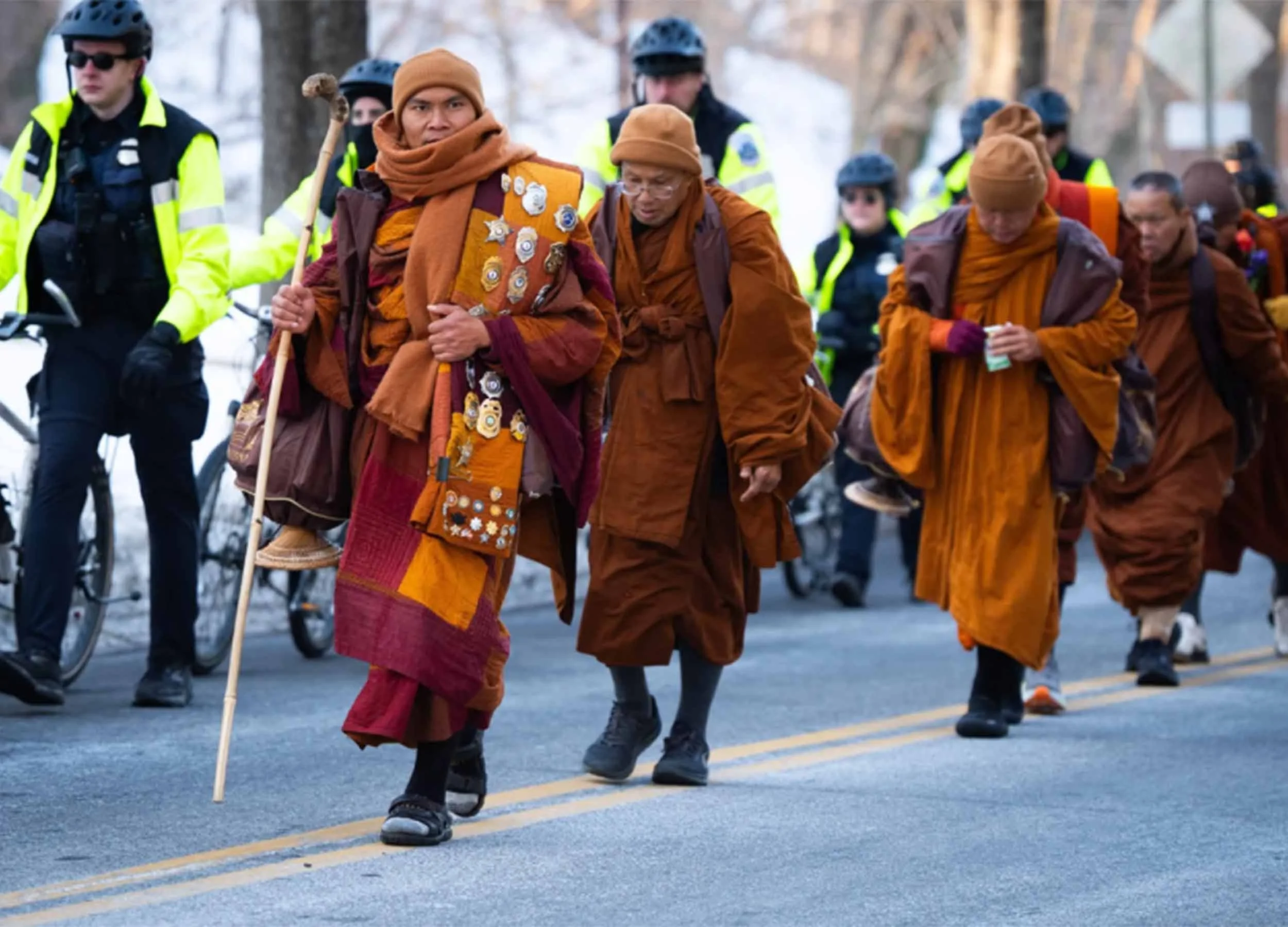
Recently in the United States, monks from several Southeast Asian countries living in the U.S. undertook a peace pilgrimage from Texas to Washington, D.C.. This Walk for Peace aims to raise awareness of peace, loving-kindness, and compassion across America and the world.
The Walk for Peace was initiated by Buddhist monks from the Hương Đạo Vipassana Bhavana Center in Fort Worth, Texas, to Washington, D.C. The walk began on October 26, 2025, and spanned approximately 2,300 miles (3,700 km).
Along the way, they walked for hundreds of kilometers, offering teachings on peace and mindfulness. People came out to welcome them, offer prayers, and reflect on the path toward peace.
(If you want to learn more about Peace walk by Hương Đạo Vipassana Bhavana Center click here)
Monks are not just spiritual figures, they are teachers, healers, peace-builders, and guardians of culture. Through their presence, Cambodia continues its long journey from suffering toward compassion and peace.