

6 wonderful things to do in Battambang
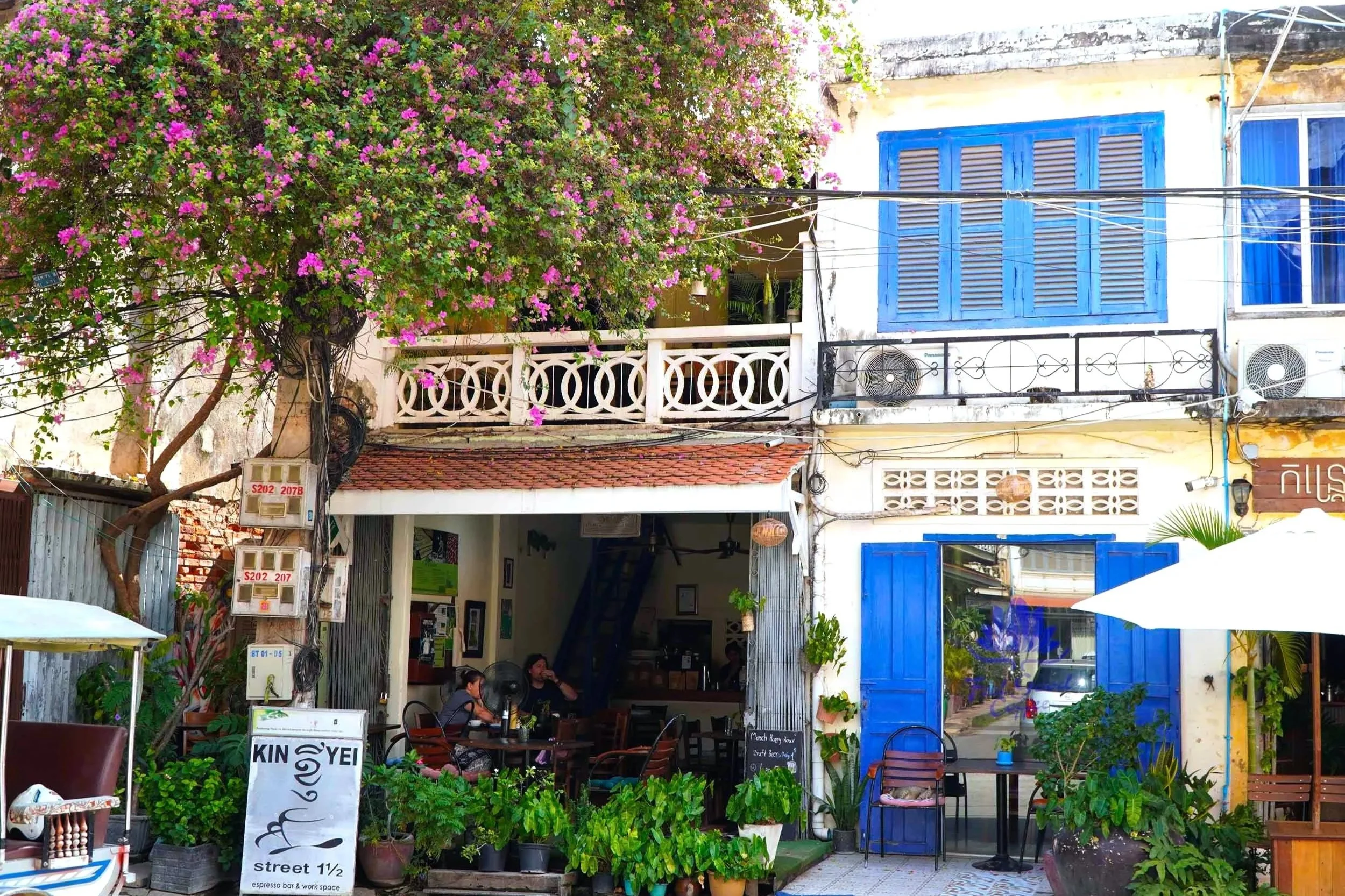
Kinyei Cafe, local favourite
It can be a challenge to travel to a place where information is limited. Even though we can explore, learn, and read reviews online today, it is still hard to truly 'feel' a place before you arrive. If you have that uncertain feeling about a destination, that is exactly why it should be on your list. Making the decision to go is often the hardest part, but once you do, it usually becomes the highlight of your trip—simply because you are traveling with a spirit of real exploration and no expectations.
When travelers look at Cambodia, they usually search for the top attractions or for authentic culture and meaningful connections. For those who want to slow down and really connect with local people, Battambang is the true 'Soul of Cambodia.'
A common question people ask when thinking about Battambang is: 'What can I do there?' In this blog, we want to share our ideas, but there is one important thing to remember: Battambang is not a place to rush. If you arrive with a 'rushing' perspective, you won’t see the city for what it truly is, and you will miss the best parts. Battambang is a destination that makes you reflect and carry memories home with you. In fact, some people even decide to move here because they find something in this city that speaks to their own lives.
Here are 6 wonderful things to do in Battambang
1. Battambang Provincial Museum
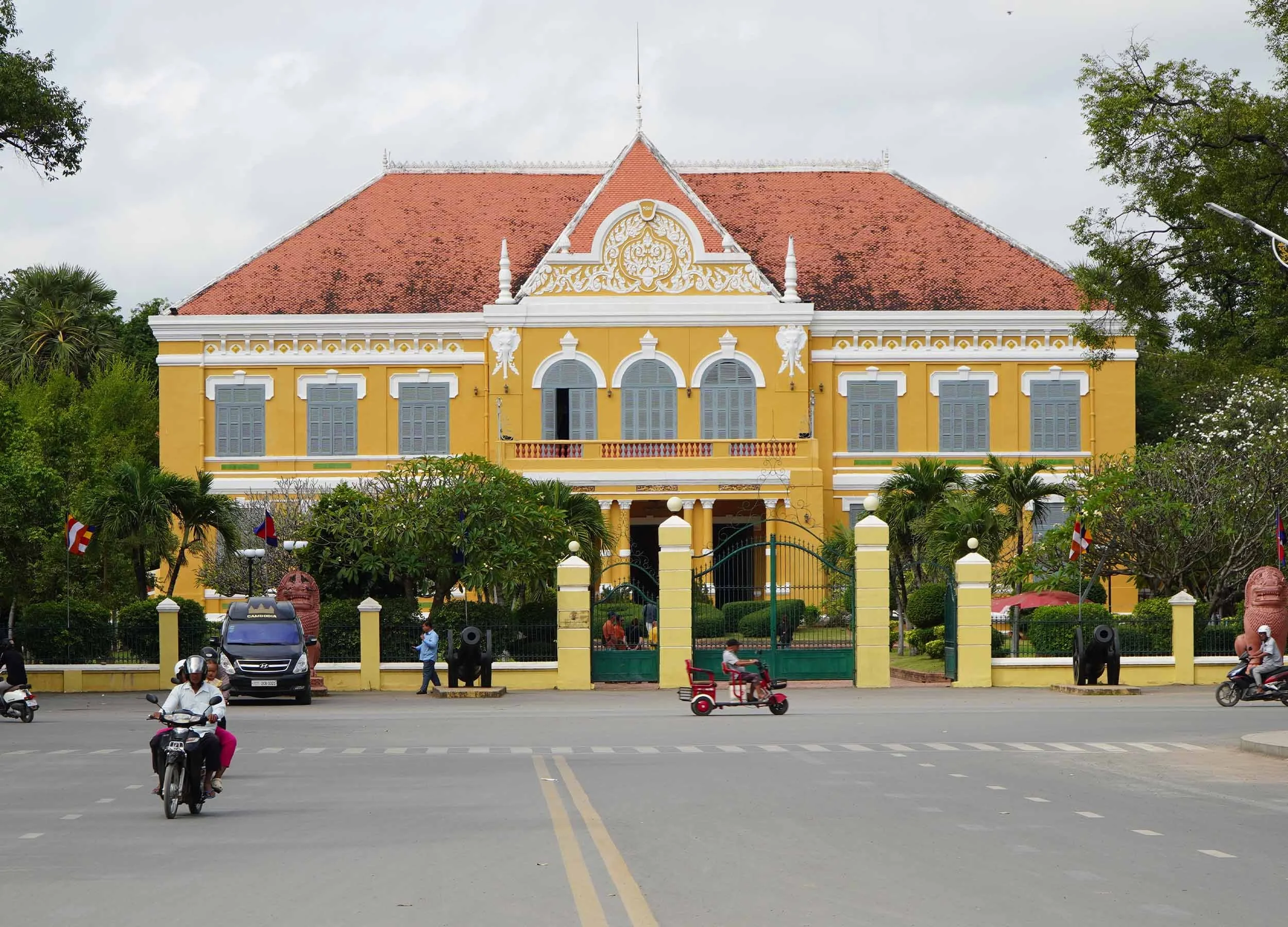
Provincial Museum, Battambang
The Battambang Provincial Museum is a historical building and a landmark of the city. This was a fort for Siam when they occupied Battambang in the 1700s. Today, this place is open to the public and is located about 4 km from the Central Market.
The story: The "Lord of Battambang" is a story that everyone here knows. It was a dark period that eventually became part of Battambang's identity. During this time, Battambang was taken away from Cambodia and placed fully under Siamese (Thai today) control, ruled by the "Lord of Battambang" family.
In the 1700s, the Khmer Empire was in decline. Internal divisions were obvious, and enemies like Siam and Dai Viet took advantage of this. After the Cambodian King was killed in a trap arranged by his own general, his son was taken away from Udong Palace. Mr. Ben, a high-ranking officer who served the King’s father, brought Prince Ang Eng to Bangkok for safety. There, he gained the trust and support of the Siamese King, which later gave him the power to return to Cambodia as a powerful leader.
While King Ang Eng lived in Bangkok, the Siamese King sent troops to rescue Udong. Because King Ang Eng was still young, the Siamese King gave Ben the responsibility to control Cambodia under Siamese supervision. Later, the Siamese King sent King Ang Eng back to Cambodia to rule as King; in return, he asked for Angkor Wat and Battambang. Under pressure, King Ang Eng could not deny this. When King Ang Eng returned, Ben was unhappy. The Siamese King worried that Ben might betray the new King, so he decided to give Ben control of the Battambang region to rule as his own.
His family controlled Battambang until 1905. The region finally returned to Cambodia because of an exchange agreement between the French and Siam called the Franco-Siamese Treaty of 1905–1907.
What to see: The museum was originally the house of the last Lord, Chhum, built in 1905. A fun fact is that Lord Chhum never had the chance to live in this brand-new house. He had to sell it to the French and escape to Thailand. Make sure you go inside to explore. There are many things to see, but most importantly, look for the photo of Lord Chhum.
In Chhumbori Lord Chhum hired the same architect to build a new house in the style of his first in Battambang. You can learn about Chhum here
2. Explore Wat Domreysor “White Elephant Pagoda”
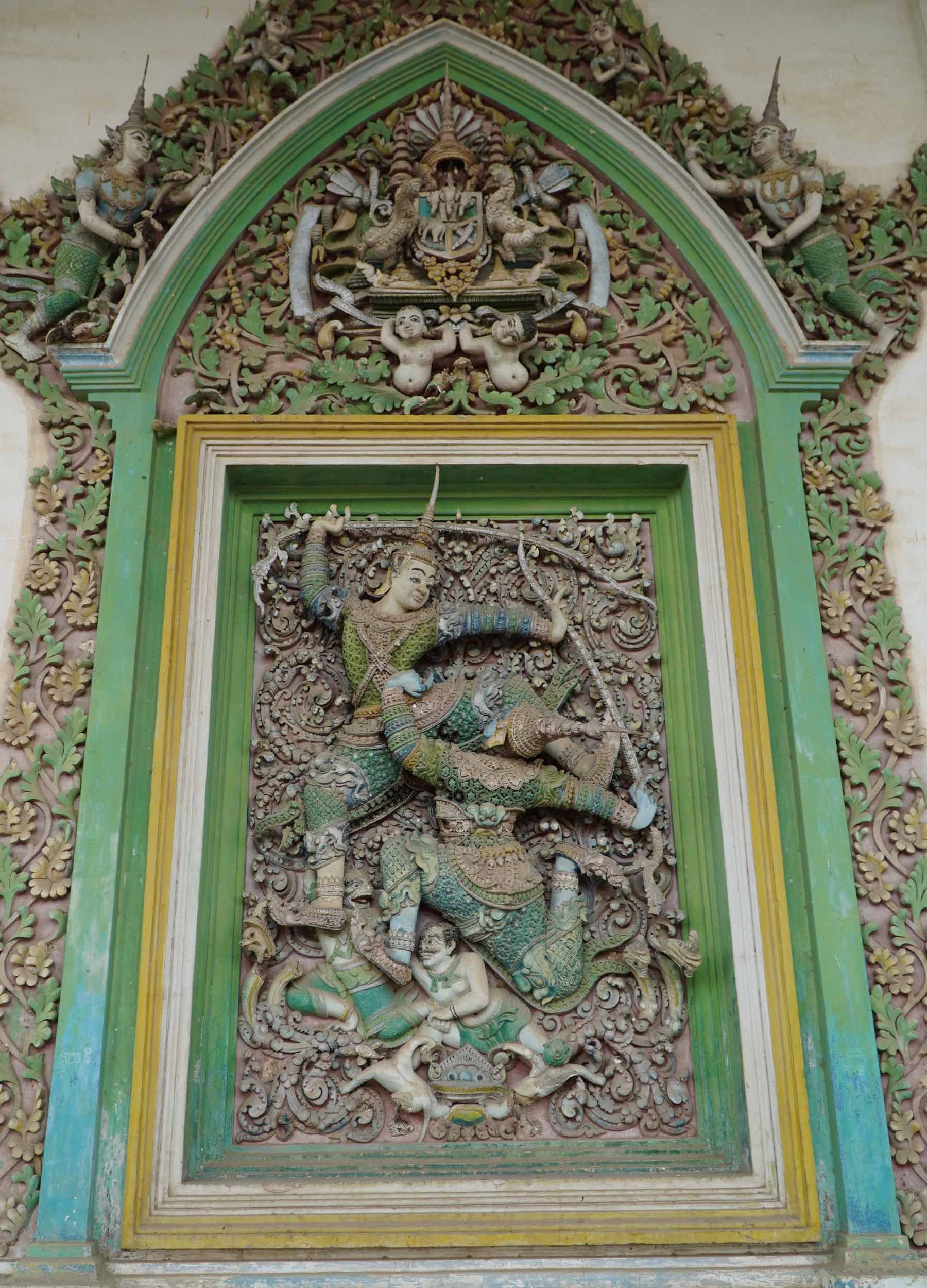
Carving on Wat Domreysor wall
Built in 1904, Wat Domreysor is one of the oldest pagodas in Battambang. Located around 3 km away from Nat Market, the Wat Domreysor "White Elephant" is a must-see. This is not a place built for tourists to hire traditional dresses for photos; it is a working pagoda with a respectful and reflective environment. There is even a Buddhist university in the compound.
The highlight of this pagoda is the main building, built in what we call the "1900 style," which integrates modern architecture influenced by countries that occupied Battambang. While the pagoda uses Khmer architecture, there are elements of Thai art and Western integration.
Mural Art: Look at the walls outside the main building. The mural art showing the power of Lord Chhum integrated Khmer art and Siamese.
Western Influence: If you look at the window frames, you will see carvings in a vine shape featuring grapes. There are also carvings featuring trains on the walls.
Story of the Pagoda: Lord Chhum ruled the region with absolute power, treating the land as his own property. People had to pay taxes to use the land, and many were forced to work in his mansion. It is said that families who had beautiful daughters had to send them to his mansion to be dancers; many later became his wives.
Even though he had many wives, he had a deep love for his first wife, Eoung. She did not agree with his actions toward those girls and believed they would bring bad karma. Over time, she became seriously ill. Chhum prayed for her recovery at Wat Kondeong and promised to build another pagoda if she got well. When she recovered, he fulfilled his promise by building a pagoda near his home, named after his white elephant, Domrey Sor.
3. A Heritage Walk through the "Yellow Streets"
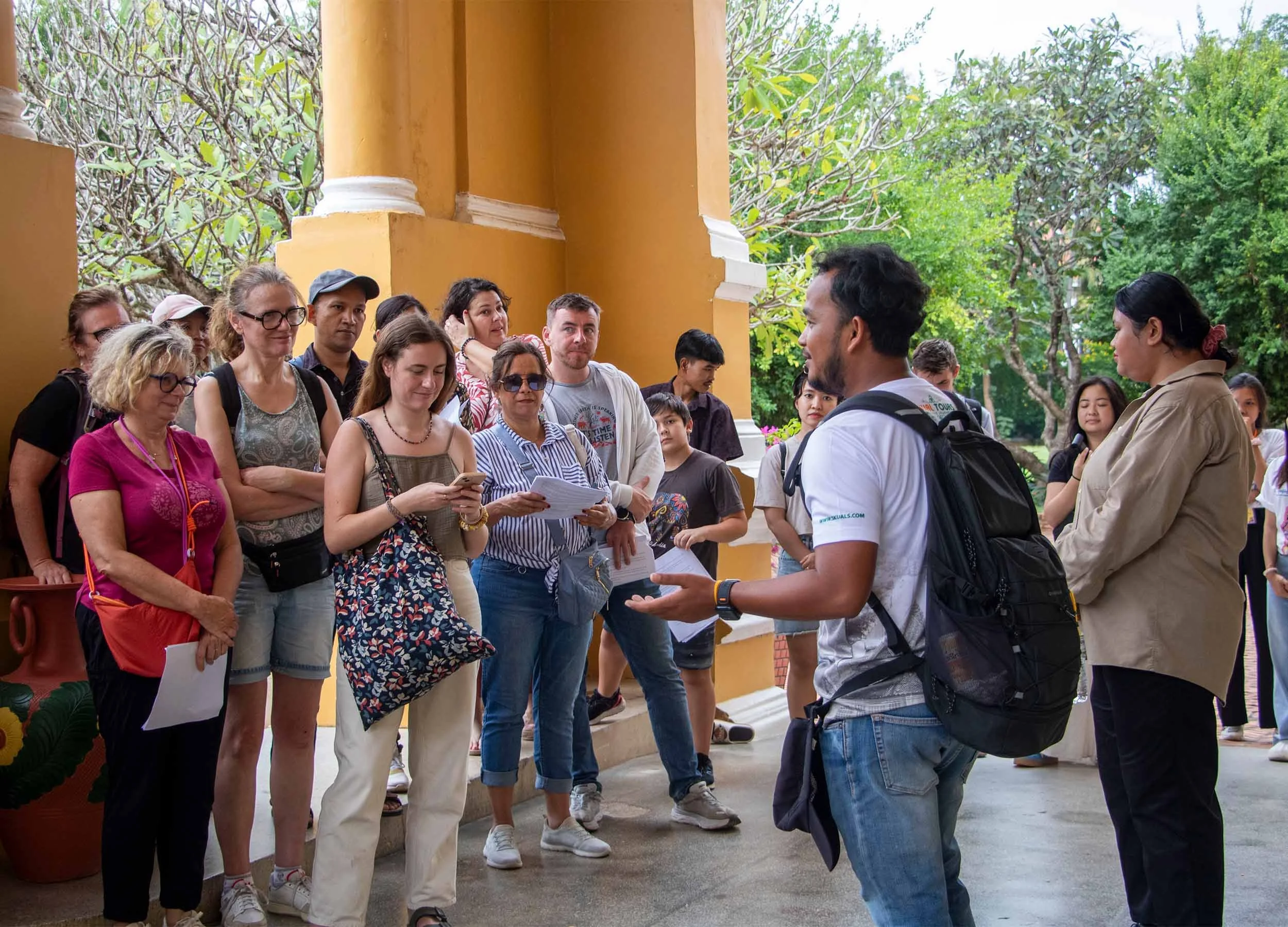
Guests visiting Chhum mansion during Sa’art art festival,2025
Battambang is known for its history and art. Once a busy trading center during French colonial times, it still has old-style buildings and lively markets. Today, it is the art center of Cambodia.
It is best to take an evening walk in the city. Start your walk around 4:00 PM from the Central Market and then take Street 2.5 toward Wat Domreysor.
Highlights of the walk:
Nat Market: An old market built by a French architect in 1937. This is the Indochina style which you can also see in Vietnam and Laos. Don’t just look at the building—make sure you go inside and walk around.
Street 2.5: This is the "Art Street" of Battambang. You will be in the middle of French colonial buildings, local cafes, and shops. You can also see mural paintings on the walls of the colonial buildings here.
If you are interested to hear more story of Battambang, you can explore our city walk tour here
4. Savor the "Rural Flavor" of Local Snacks
If you are an explorer, take a countryside tour. The most popular option is the local livelihood tour. There are a variety of ways to do this; you can choose to ride a bicycle or join a bike tour, which is very popular. If you plan to travel to the Bat Caves or the Bamboo Train after this village tour, a Tuk Tuk tour is recommended. Tuk Tuks are a local form of transportation that is very common everywhere in Cambodia.
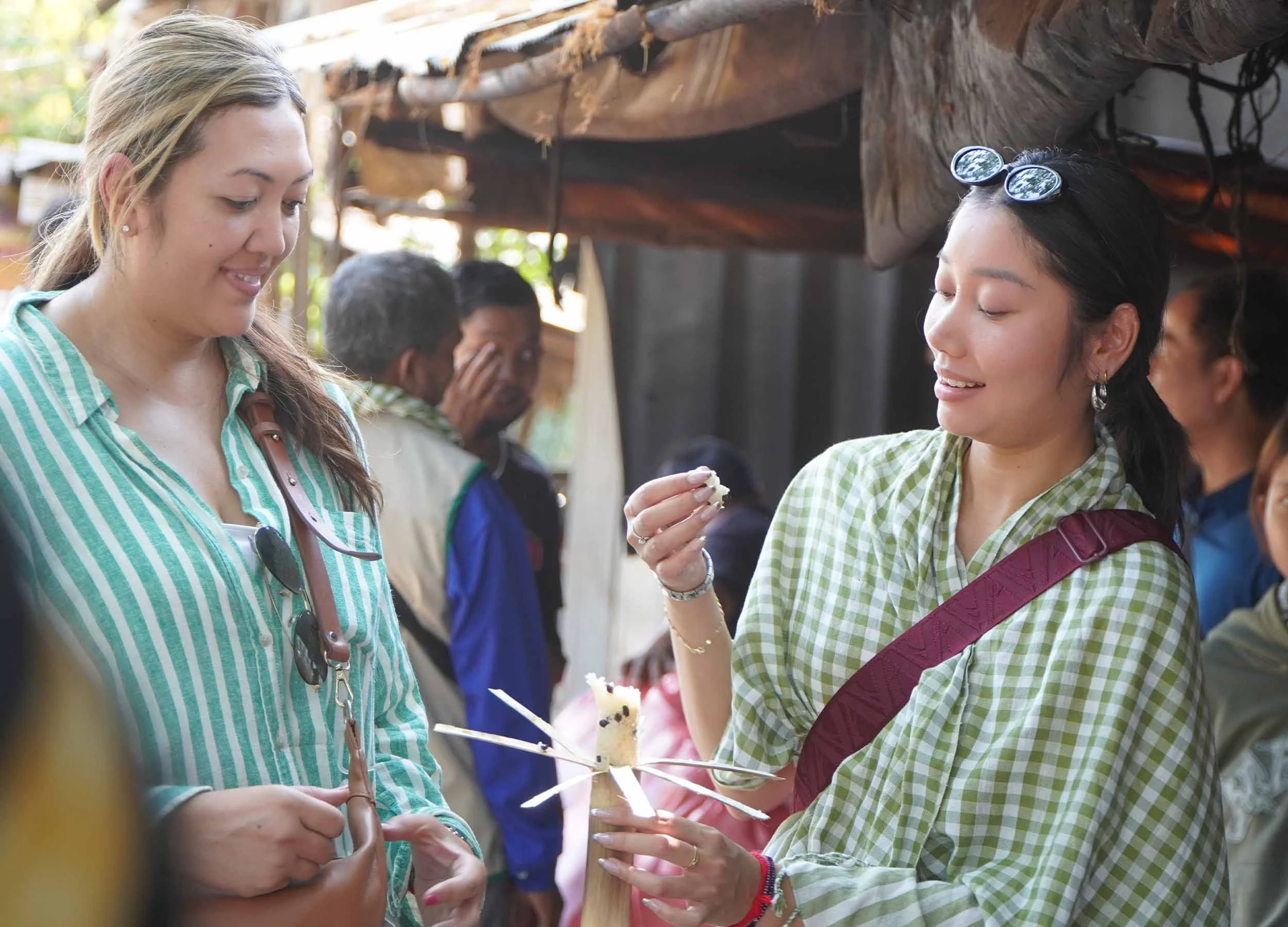
Guest taste Krolan (bamboo sticky rice cake)
Highlights
Village life: The countryside of Battambang does not just give you views of landscapes and rice paddies; there is the life of the people that you can observe on the journey. You will see daily activities, children waving to you, and locals reaching out with a smile full of curiosity. This shows you what Cambodia really is. It is a chance to create memories and meaningful connections, especially if you have learned some Khmer words to use.
Tasting local snacks: Visit a local family to see how Krolan (bamboo sticky rice) is made. It takes two hours over a charcoal fire to get that perfect creamy, savory taste. This is one of the most popular snacks in Cambodia. You are not just tasting it; you are learning about the snack and the family who chooses to make a living by creating it.
Visit Rice Paper and Dried Banana families: Try the local rice paper or dried bananas in the villages surrounding the city. What people usually take away from this tour is an understanding of local life and the family legacy that has been carried from one generation to the next.
5. The Sunset Ritual at the Bat Caves
The sunset at the Bat Caves is the most popular activity in Battambang. However, most people focus only on that and forget about something special they should do while they are there. If you have plans in the morning, try to keep them light or easy so you can make your sunset experience at the caves more memorable.
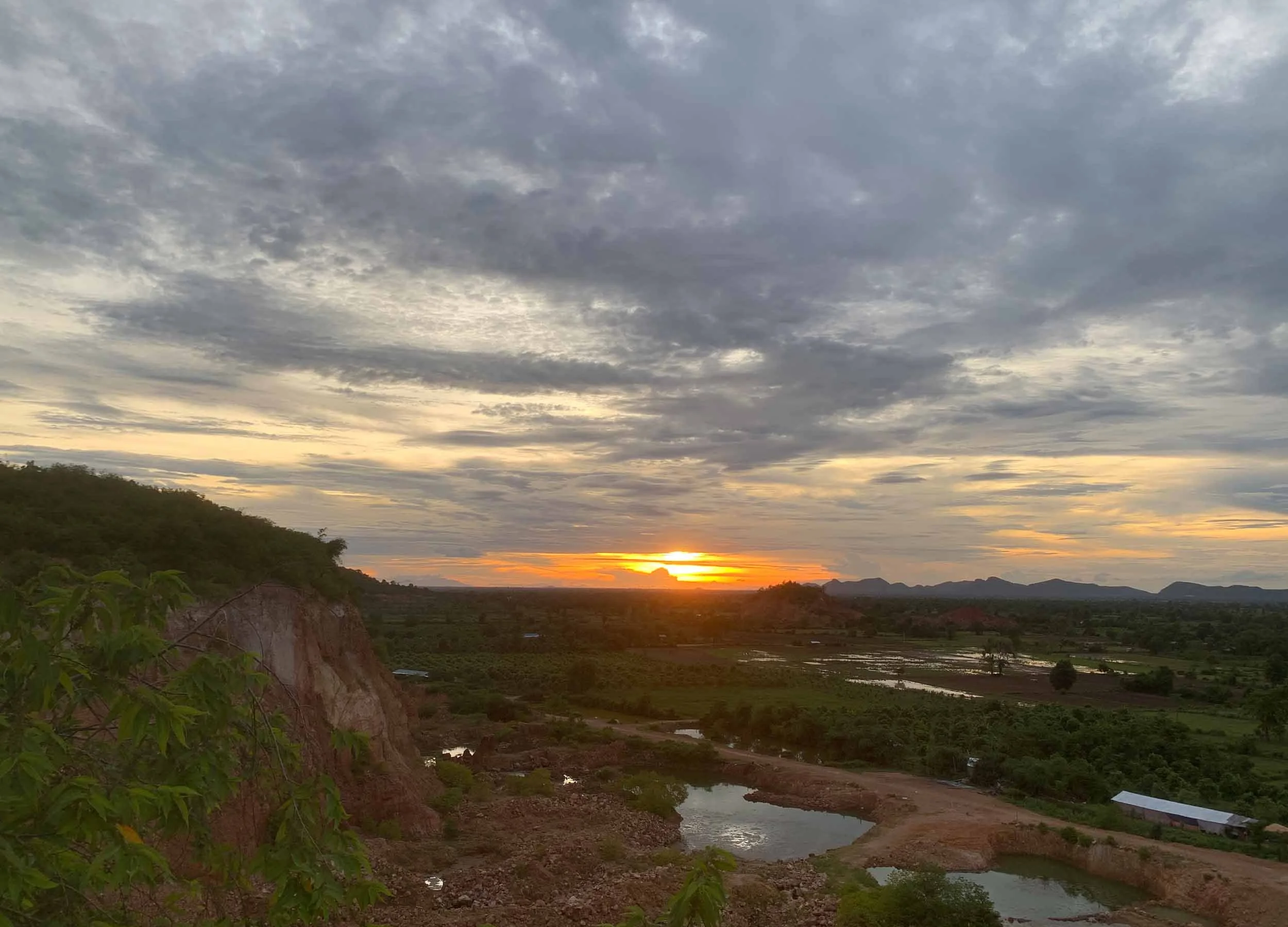
Sundet at Sompov mountain
Phnom Sampov is the spiritual heart of Battambang. For many generations, this has been a place where monks come for meditation retreats and laypeople come to pray for important things in their lives. On top of the mountain, there is a pagoda, a meditation hall, and many caves to explore. Because this site is sacred, the Khmer Rouge used this pagoda as a prison and killed people in a cave, known as the Killing Cave today. Don’t miss this, and here is the plan that we recommend:
Travel to Sampov Mountain at 3:30 pm: Explore the pagoda on top of the mountain. There is a ticket fee of around $2 per person.
Coordinate with your driver: You should ask your driver to reserve a spot for you at the bottom while you are up the mountain, so you have a place to sit while watching the sunset later.
The Big Buddha: Save some time for the big Buddha statue at the foot of the mountain. You should be back down at the foot of the mountain before 5:30 pm.
6. Unique Circus Show
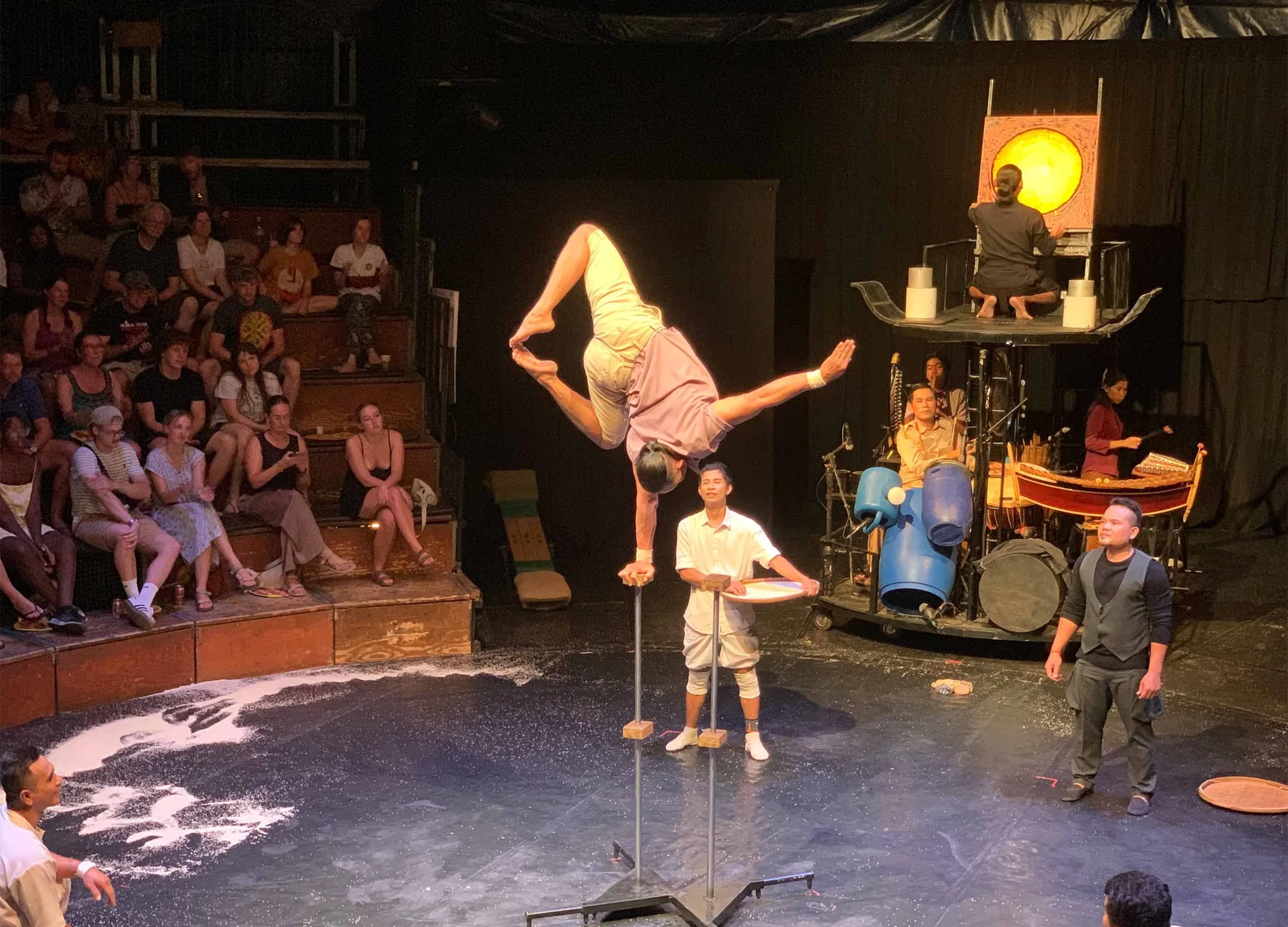
The Phare Circus in Battambang is one of the city's most unique activities. These incredible shows integrate the real-life experiences of local artists, which are tied strongly to the lives of local Cambodians. Moreover, the performance features a series of different traditional art forms, from dancing and singing to live music. One of the best parts of the show is the live music, which makes the performance joyful and highly entertaining. Every story is crafted by local artists who have spent more than 10 years in training.
Why you should not skip Phare Circus in Battambang:
A unique experience: This is the most unique show in Cambodia, integrating almost all art forms into a real-life Cambodian story.
Holders of the Guinness World Record for the longest circus performance, which lasted more than 24 hours.
Support the mission: Show your admiration for the work Phare has done for children and the arts in Cambodia.
Empower young artists: Your ticket gives young artists the opportunity to continue their schooling by supporting the organization.
Phare is one of our trusted partners. In 2025, we worked together to create an immersive art tour in Battambang for an event called the Sa’art Urban Art Festival 2025. This is another unique project that Phare and Skual Tours have completed to help promote the city and preserve Battambang’s heritage. You can find the video of that tour here.
You can more information by clicking here