
The story that shaped Cambodia today
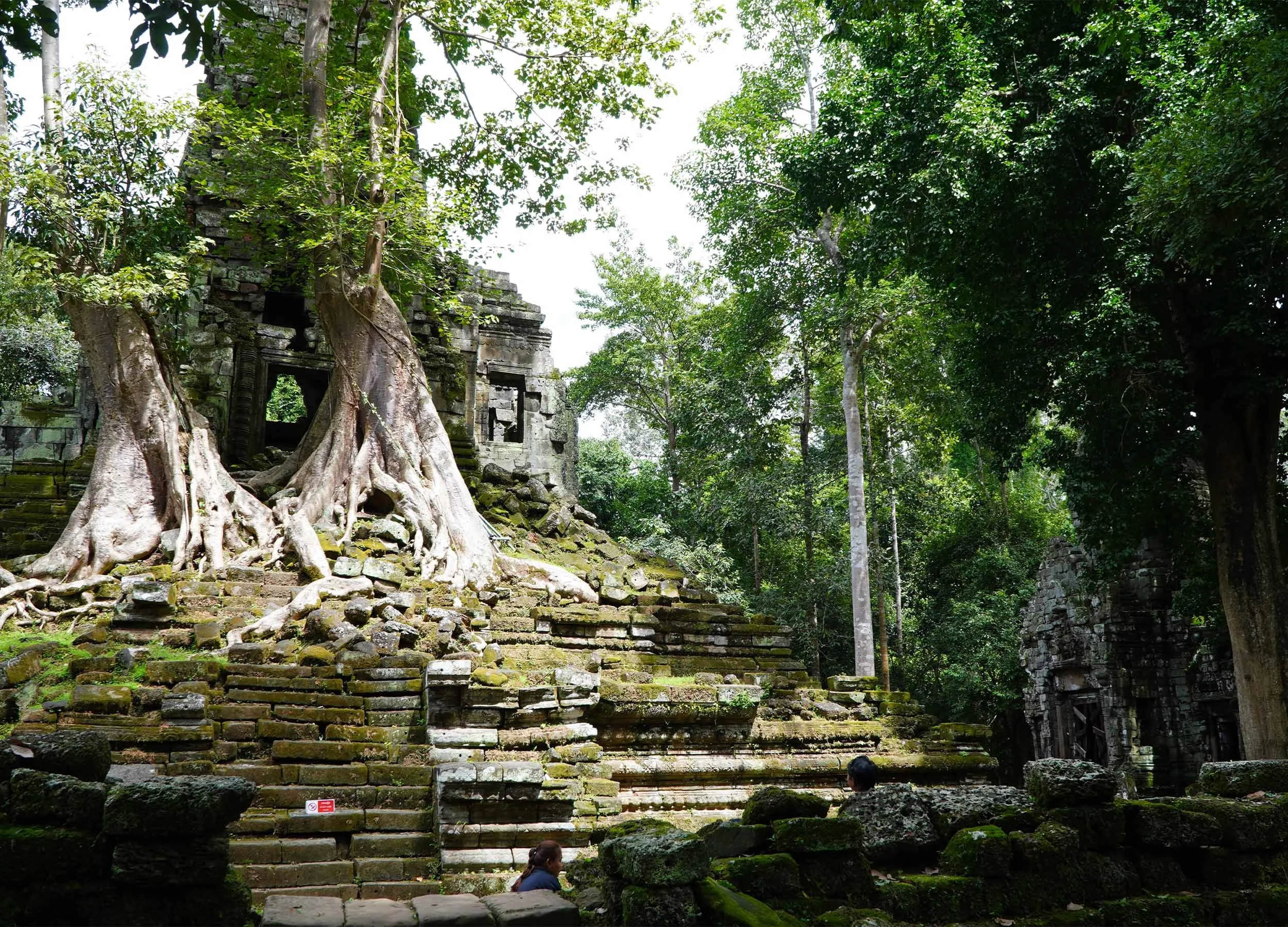
Pali Lia Temple, Angkor park
When asked about Cambodia, travelers usually think of two things: the ancient temples of Angkor Wat or the tragedy of the Khmer Rouge. While much has been written about our history, news of the genocide has shaped how most of the world sees us. History is important, but Cambodia is more than only these two things.
Why do we bring this up? Because we believe these stories often overshadow what Cambodia is truly like today. Many travelers arrive expecting only hardship or poverty, seeing the country through a narrow lens. While the past is part of our story, it is only one corner of who we are. We want to move beyond these old narratives. Our goal is to share a broader view of Cambodia, showing you how these experiences have shaped the country today.
Next, we are going to share some historical events to show what Cambodia has been through. We believe that without acknowledging these important events, you will not be able to understand what makes Cambodia what it is today. This will be a brief history; some elements might be missing or left out because, again, our aim is to share the story of the Cambodian people. History itself is not our only focus.
The Golden Era and the Fall to Year Zero
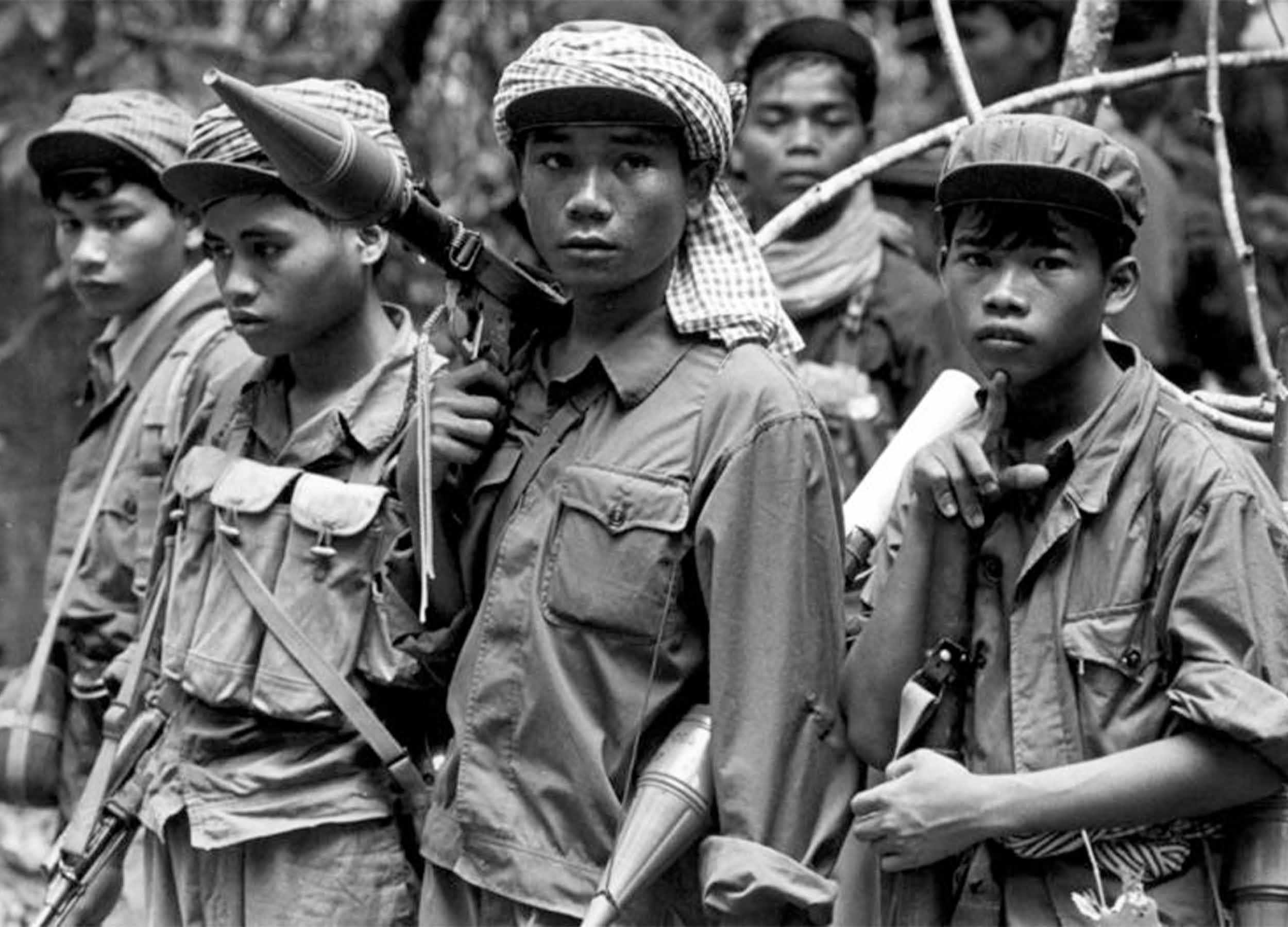
Khmer Rouge soldiers
After gaining independence, Cambodia flourished under the leadership of Prince Norodom Sihanouk. During this time, Cambodia was one of the most developed nations in Southeast Asia, and Phnom Penh was famously known as the "Pearl of Asia."
However, as the Cold War intensified, the world became divided between Communist and Democratic powers. Prince Sihanouk fought to keep Cambodia a neutral country, hoping to protect it from the growing conflict. This neutrality was eventually shaken by the Vietnam War. North Vietnamese forces used the borders of Laos and Cambodia as a supply route to fight the U.S. military in South Vietnam. Seeing this as a threat, the United States began a massive bombing campaign inside Cambodian territory.
In 1970, the Prince was removed from power in a coup, and Cambodia officially fell into a brutal civil war. The conflict pitted the U.S.-backed government of Lon Nol against the Khmer Rouge, who were supported by North Vietnam and the Soviet Union. When the U.S. withdrew from Vietnam in 1975, the Lon Nol government was left without support and collapsed.
The Khmer Rouge, led by Pol Pot took control of Phnom Penh on April 17, 1975. This marked the darkest chapter in Cambodian history. Cities were evacuated, the economy was destroyed, and anyone seen as "capitalist" or "educated" was targeted. Cambodia had fallen to "Year Zero" a time when everything, from culture to human life, was systematically dismantled.
Survival Under the Khmer Rouge
Everyone at the age of 60 to 70 years old today is a survivor of that war. It was the most difficult time in human history. As one survivor from the documentary Don’t Think I’ve Forgotten said: "The people killed us. We didn’t know why they were bombing us."
When the Khmer Rouge entered Phnom Penh, everyone was happy at first, but they didn’t know why the people were being evacuated from the city. Under the Khmer Rouge, Cambodians walked out of their homes in the city and into the countryside, where most of them were killed. The Khmer Rouge didn’t allow discussion or questions. They implemented communism under one political organization—later known as an organization that "educated" people through torture and murder. The hope that the war was finished and the Khmer Rouge would develop the country was gone; only rules, torture, and killing became the law. Two million people lost their lives under Pol Pot’s implementation of "no rich, no poor."
War in the 1980s – 1990s
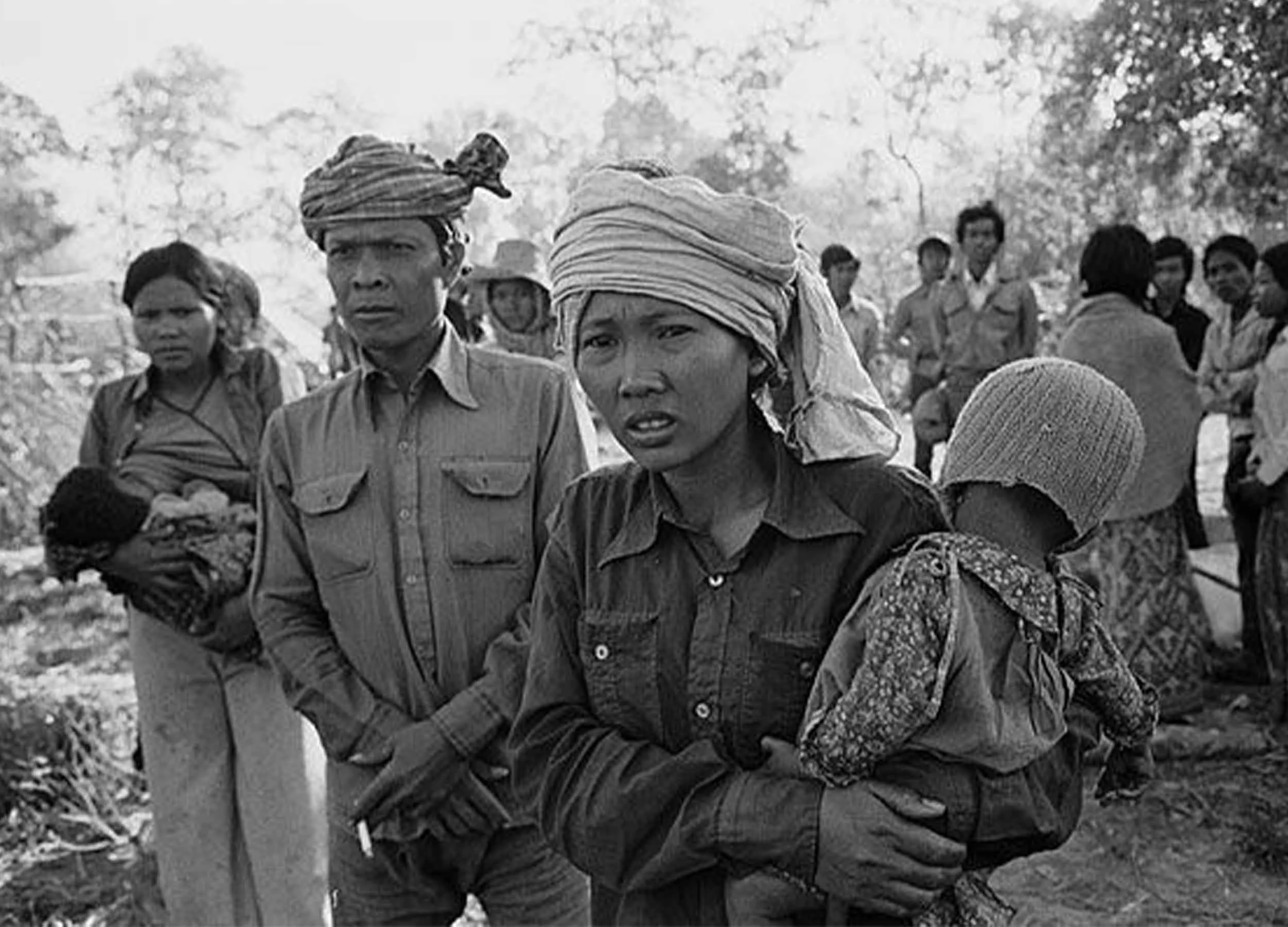
Cambodian Refugee Camp near Thai border in 1985
Most people know about the Khmer Rouge, but they might not be aware of when the regime actually ended. Pol Pot and his followers escaped from Phnom Penh to Battambang and based their military at the border of Thailand. This began the second part of the war.
For the survivors of the genocide, the suffering was not over. The 1980s and 1990s saw a war between the Vietnamese-backed troops of Heng Samrin and a coalition of Pol Pot, the Royalists, and the Son Sann front. This war lasted almost 20 years. Until Pol Pot died in 1998 that the last Khmer Rouge soldiers group joined the government under win-win policies and the facilitation of the UN.
Cambodia was in a position where there was nothing its people could do; the future was no longer in their hands. The nation went from being an independent, lawful nation to one where every part was broken down. People were skinny because they had no food, and many died because there was no healthcare. Men were forced to be soldiers and died for an uncertain cause. The whole society lived in sorrow with a broken legacy. Families were torn apart.
The war continued in Battambang and other provinces along the Khmer-Thai border. Millions tried to flee to refugee camps, but many died from malaria or landmines in the forest before they could reach safety. Often, only women were allowed into the camps, so fathers became soldiers just to get food to survive.
The Seeds of Hope
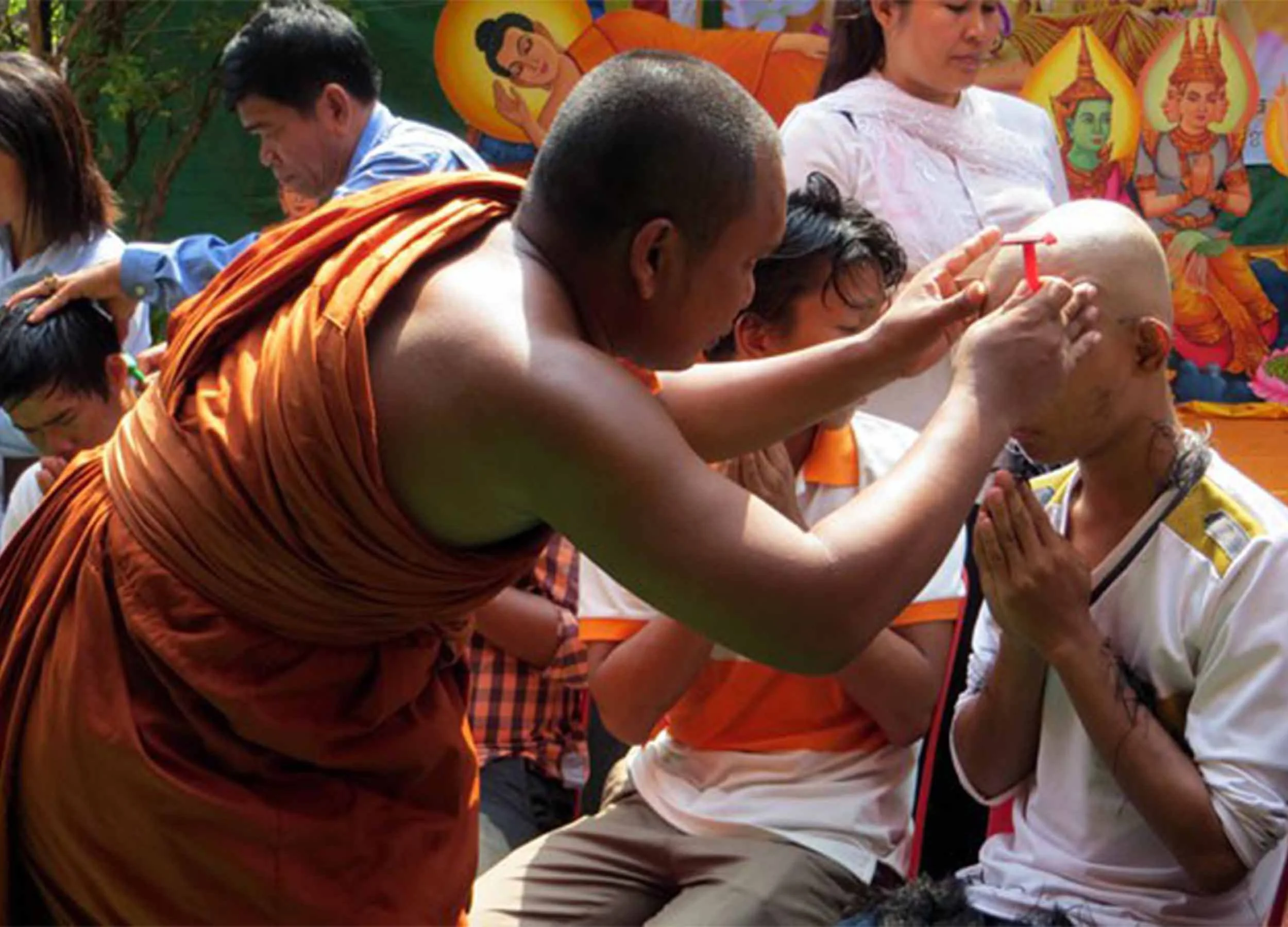
Ordination ceremony
What we want to share here is not just the facts of history, but the story of Cambodians—including myself, as a child who lived through the last war of the 1990s.
Back then, it was impossible to see hope for Cambodia. But everyone was optimistic in silence. When the Soviet Union collapsed in 1991, the funding for the conflict began to stop. Then, the government and the coalition reached a peaceful agreement in 1991, allowing the United Nations to enter Cambodia for a free election in 1993. That was the route to peace, and that is where Cambodia started to hope and shape the country we have today.
Whatever you see in Cambodia today comes from a hope that was almost impossible to find. It was the sacrifice of the older generation for the new generation. Everyone went through the same suffering, and that created a shared hope. Teachers, doctors, artists, and builders began to work without salaries. Fathers put their hope into their children, and families built resources to make a better Cambodia and avoid a repeated genocide. Buddhism also played a huge role in our healing. Together, these efforts created a new Cambodia that is strong and resilient.
This history has shaped a nation that is full of smiles again. A common question we hear from our guests is how Cambodians, who have been through so much, can still have such genuine smiles. The explanation is that through our own suffering, we understand the suffering of others. The great pain during the war created deep empathy and compassion in the hearts of Cambodians, and that created our smile, offering to help heal you from your own suffering.