

Cambodian Cultural Dos / Don’ts
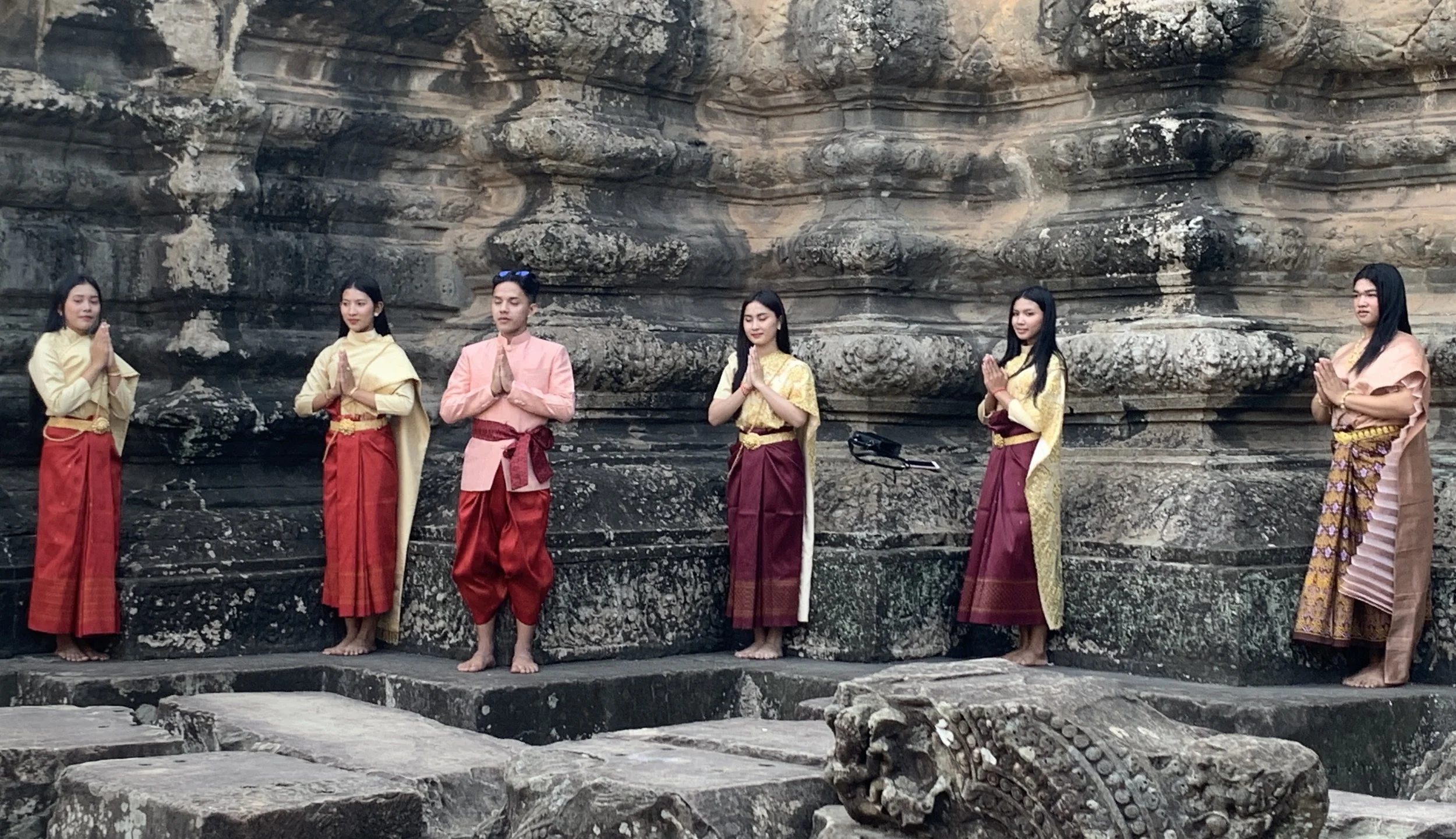
Cambodian culture is deeply rooted in tradition, respect, and community values. One of the most important cultural practices is showing respect to others, especially elders and monks. The traditional greeting, called the Sampeah, involves placing your palms together in a prayer-like gesture and bowing slightly. This gesture is used when greeting, thanking, or showing respect. Modesty is also essential, especially when visiting religious sites. Travelers should wear clothing that covers their shoulders and knees when entering temples, and shoes should always be removed before entering homes or sacred spaces.
Cambodians are generally warm and welcoming, and a smile is a common way of showing politeness. However, certain behaviors are considered disrespectful. Public displays of affection, such as hugging or kissing, are uncommon and should be avoided in public areas. Touching someone’s head is also highly inappropriate, as the head is considered the most sacred part of the body. Similarly, pointing directly at people or religious objects with a finger is seen as impolite; an open hand should be used instead.
In daily interactions, it is important to remain calm and avoid raising your voice. Losing your temper or showing frustration in public is considered rude. When visiting temples, tourists should avoid sitting with their feet pointing toward a Buddha statue, as feet are considered the lowest and least sacred part of the body.
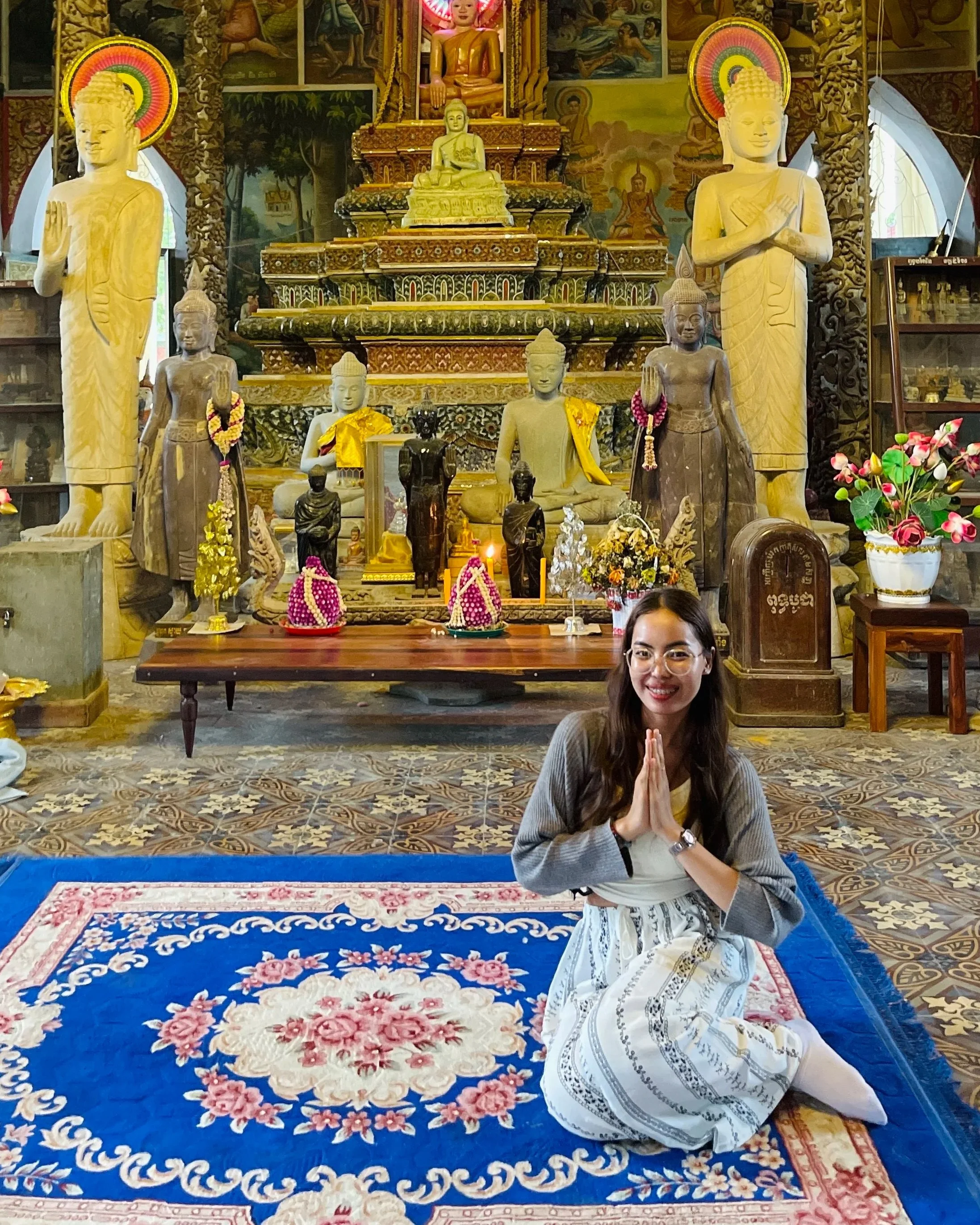
It is also important to bow slightly when you walk through or past a group of people, especially a group of elderly individuals. Bowing is a sign of respect and shows that you are a well-mannered person. Taking the time to learn enough of the Khmer language to say formal greetings shows deep respect to locals who might not understand your native language. I invite you to be more than just a visitor, a guest, or a tourist—be a person who is welcomed into our community to share in our valuable culture.
The Khmer Sampeah (Greeting)
There are five different levels of the Sampeah in Khmer culture, used depending on the age and status of people in Cambodian society. The higher your hands are placed, the more respect you show:
At chest level:Sampeah to people of the same age or peers.
Up to the chin:Sampeah to older people or those of higher status.
Up to the nose:Sampeah to your parents and teachers.
Up to the eyebrows:Sampeah to monks or the King.
At the forehead: Used when praying to God, sacred spirits, or Buddha statues.