Introduction to Buddhism in Cambodia
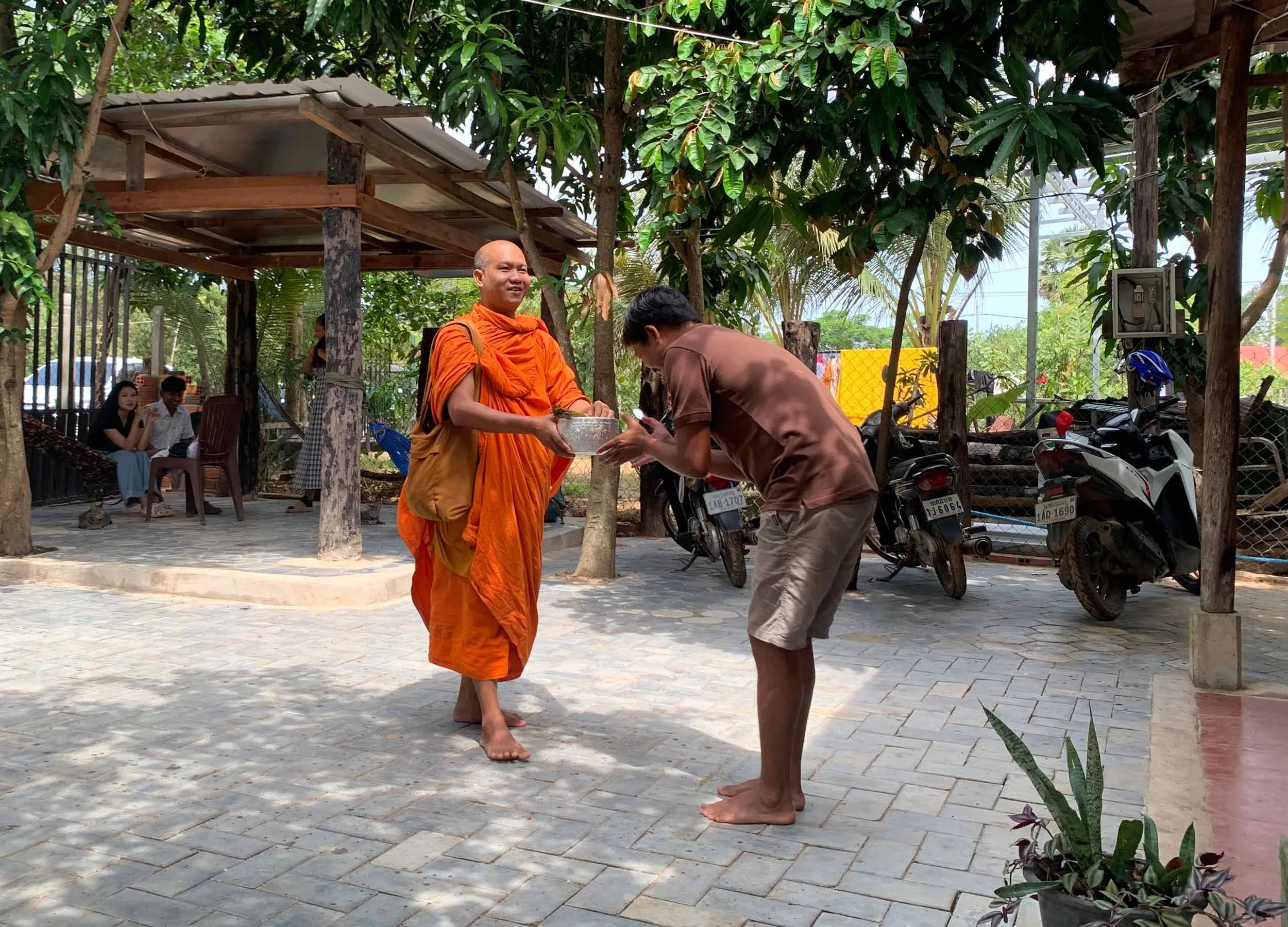
Monk was giving blessing
Understanding Buddhism
Hi! I am Mony, founder of Skual Tours. In this article, I would like to share some of my knowledge about Buddhism in Cambodia and the experience myself as the temple boy living in a pagoda in Battambang.
Understanding Buddhism in Cambodia is not just to help you avoid unexpected cultural shock but it allows you to participate in local culture, learning about Cambodian people more deeply. As most people know, Buddhism is huge in Cambodia. When you arrive, you will notice that the monastery is everywhere. There are more than 80% of Cambodian are practicing Theravada Buddhism.
How did Cambodia become a Buddhist country ?
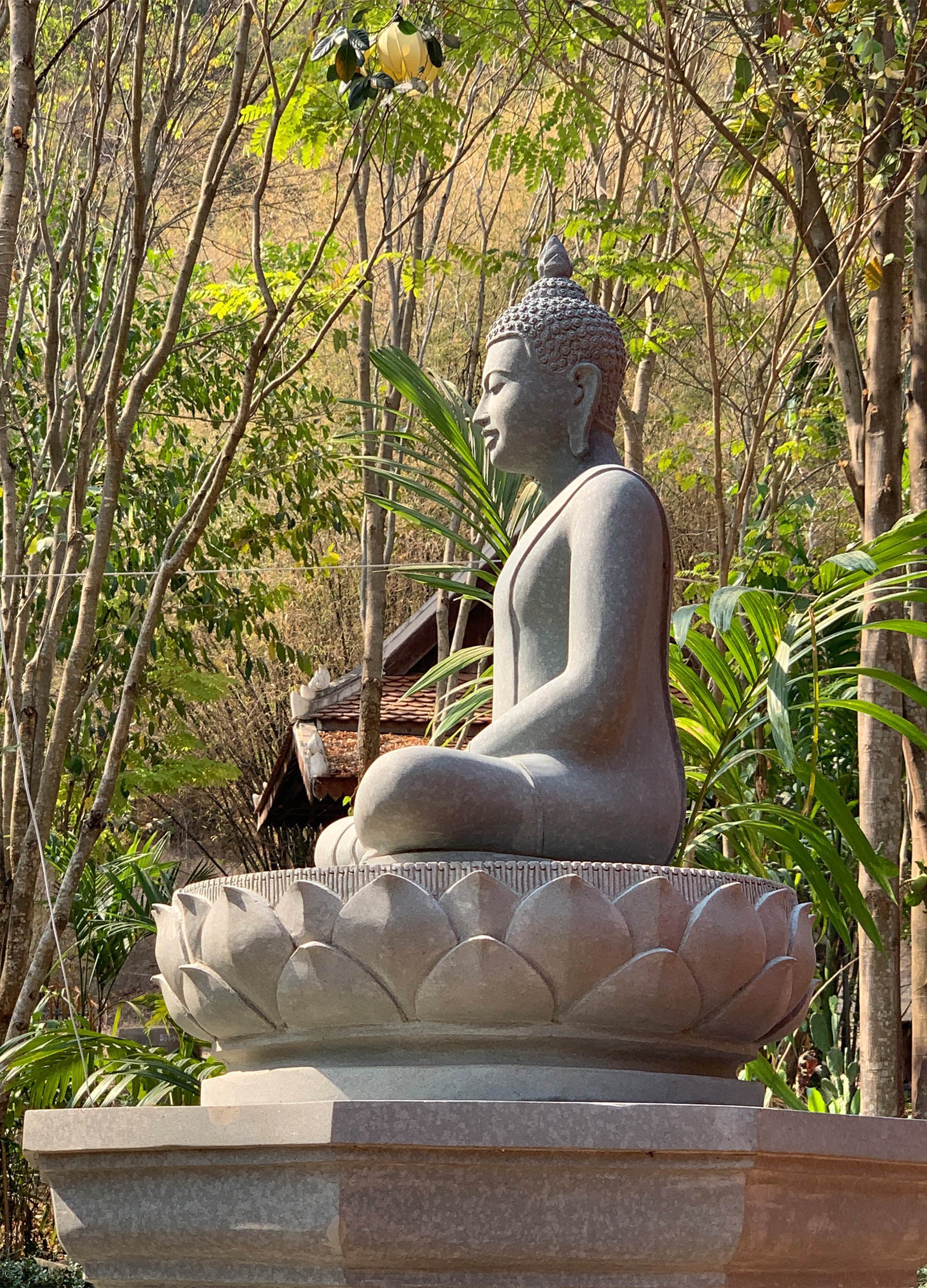
Meditating Buddha statue
Buddhism was founded by Siddhartha Gautama, a prince of the Kapilavastu kingdom, located in modern-day Nepal and India. The main lesson the Buddha taught his followers is that the freedom from mental pain and dissatisfaction is possible for everyone, and he provided a practical, step-by-step manual on how to achieve it. Today, there are an estimated 535 million Buddhists worldwide.
In the early centuries AD, Buddhist monks traveled to Southeast Asia to spread the teachings of the Buddha. Cambodia received Buddhism during this period, around the 3rd century AD, under the reign of King Fan Shih-man of the Funan Kingdom. During this era, both Hinduism and Buddhism became the main religions of Cambodia. The philosophy ran deep, influencing everything from the daily practices of the king to the everyday lives of people across the country.
Today, Cambodians practice Theravada Buddhism, which is distinct from Mahayana Buddhism and other traditions. Theravada is the oldest surviving school in Buddhist history. It strictly follows the original teachings of the Buddha and the Tripitaka (Preah Trai Bedok), the sacred Buddhist scriptures. Hundreds of years after the Buddha's passing, Theravada was brought to Sri Lanka by the son and daughter of King Ashoka. Sri Lanka then became the historic center of the Theravada tradition. Later, in the 12th century, this form of Buddhism spread to Cambodia through Prince Tamalinda, the son of King Jayavarman VII, a king who built Bayon temple.
What Makes Buddhism Important to Cambodia
Cambodian culture is strongly influenced by Indian heritage, which was originally brought to the region through ancient trade routes and the introduction of Hinduism and Buddhism.
But how exactly did these religions deeply shape Cambodia’s traditions and culture? The answer lies in how religion was introduced: as a form of education. In the Khmer language, the word for religion is Sasna (សាសនា), which literally translates to "education, or following elders’ advice." This shows how religious teachings were integrated into everyday life to guide and educate the public. In the old days, religious philosophy was used as a moral compass to shape behaviors, correct social characteristics, and build harmony within Cambodian society. Buddhist monks and or Hindu priests were the scholars who were the king's advisors.
Most Khmer are Buddhist by birth, born directly into a Buddhist culture. From an early age, they learn a core philosophy from their families: how to minimize suffering by doing good deeds and avoiding bad Karma under the navigation of loving kindness and compassion.
As a visitor, this deep-seated worldview can sometimes be difficult to fully comprehend. Why I say that is because it is not always visible on the surface.
For example, when you hear about avoiding bad Karma, you might ask: What exactly qualifies as bad Karma? Is taking a life bad Karma? If so, and if Cambodians eat meat, who is responsible for killing the animal? Cultural concepts like these are not easily explained in a few words, but you will naturally begin to understand them if you spend enough time in Cambodia. Therefore, understanding the root of a belief that lives within a foreign tradition can take a bit of time to fully make sense.
The two reasons why Buddhism is vital to the Khmer People
Buddhism does not exist merely as a religion; it is tied into everyday Cambodian life, guiding education, shaping social morals, and defining cultural identity. Because it is the constitutional state religion, criticizing Buddhism without a deep understanding or proper reason is not only considered highly disrespectful, but it can also lead to legal consequences under Cambodian law.
Reason A: The Khmer Identity and Spirit
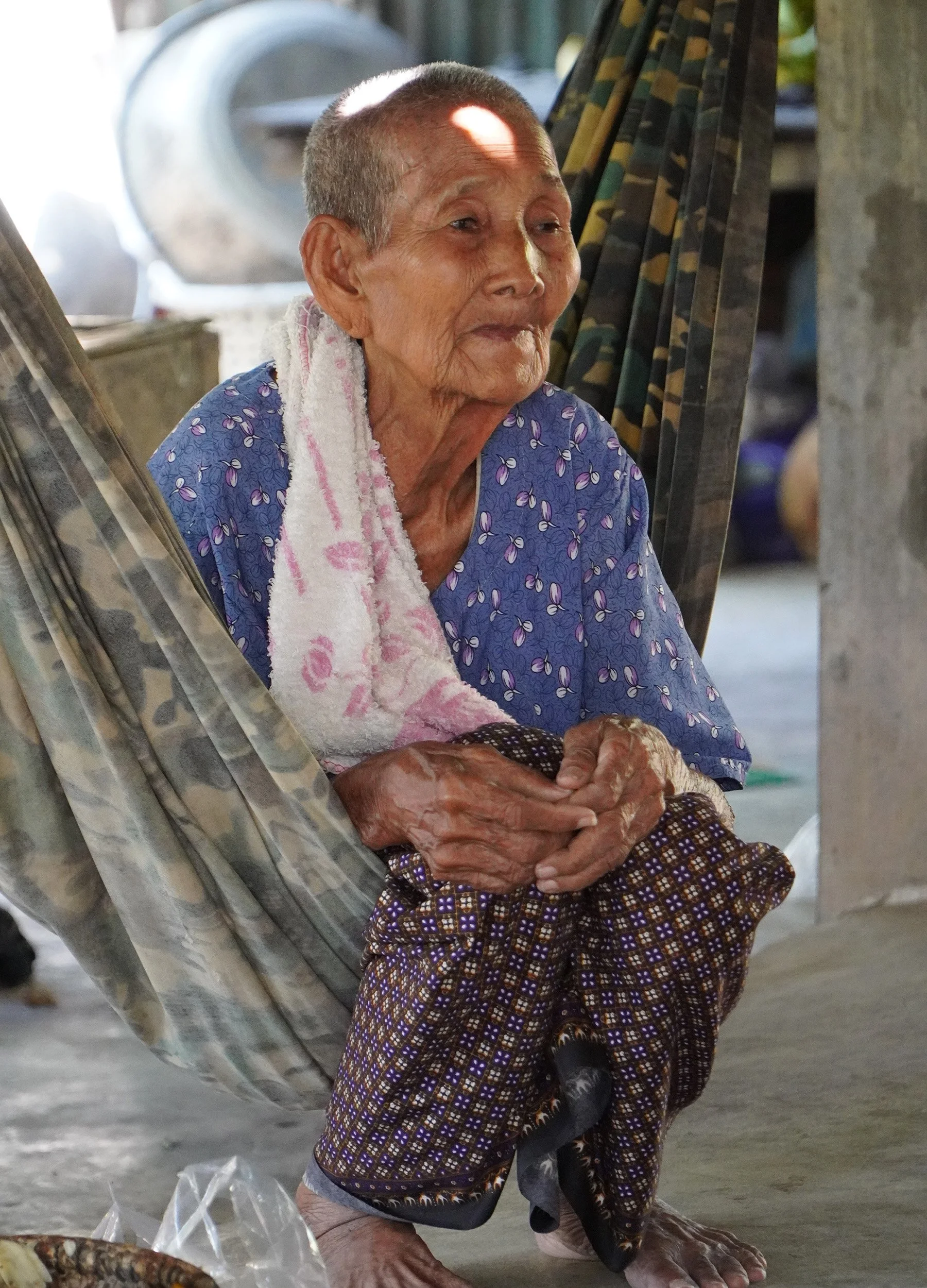
Battambang villager
Buddhism lives deep within all Khmer people from birth. Every single person shapes their life experiences from home before starting their formal school education. Every daily practice there slowly defines who you are and what you believe, forming the foundation of how you perceive the world.
To the Khmer, this is why Buddhism is so important: it is the foundation we use to analyze what is good or bad, and what is important or not. More importantly, Buddhist philosophy plays a key role in balancing the internal and external aspects of all life events. 'Internal' refers to the state of the mind, while 'external' refers to understanding how to cultivate good actions toward oneself and others through Buddhist teachings. Examples of this include practicing Loving-Kindness (Metta), Compassion (Karuna), Sympathetic Joy (Mudita), and Equanimity (Upekkha).
You will see this right away when you meet Khmer people; they will comfort you with a warm welcome smile. The compassion from within shines through as they recognize any discomfort you might feel in a new place and they want you to feel safe.
An example of an event that describes that Buddhism helped balance all life events of Cambodia was the civil war. Buddhism was completely lost during the three years of the genocide. At that time, the internal and external worlds of the Khmer people were in total imbalance. Losing what we could rely on internally made it extremely difficult to pursue a dream that was already hard to see.
The return of Buddhism did not just make Cambodia complete again; it helped stabilize the internal well-being of the people. This internal balance helped create the hope that built the Cambodia we see today. The yellow rope brought light for people to navigate their way out of the suffering of the genocide.
All mentioned above explains why no other religion could replace Buddhism after its absence during the war. It was not merely the return of a religion, it was the return of the Khmer spirit.
Reason B: The Oldest School and Center of Knowledge
Monks are considered to be scholars, and the pagoda is a school rooted in history since the 12th century under Queen Indradevi, the wife of King Jayavarman VII. She served as a principal at the Ta Prohm temple, a fact verified by 12th-century stone inscriptions. Even today, men who have been ordained for a long period of time are called Anit, meaning a scholar.
Before modern school, religious sites were schools. Ta Prohm temple was a school in the 12th century. This practice continues to today. If you have been to Angkor Wat, you will notice there are two pagodas there. We don't know what majors were taught there in the old days but we can notice this through the Khmer empire temple structure and massive complex water irrigation system which was used to manage water by the Khmer empire. This might be taught through this form. There is no reference but if the temple were a school then the system could be taught here.
Today, the pagoda education system is still live but slightly changed to follow modern curriculum. Buddhist school is the oldest education system in Cambodia and this plays important keys to help increase the literacy rate of Cambodia by providing resources and access to young students who have limited resources to study.
Buddhist schools create access to education for poor children. Their family will send their son to ordain so they can study in the pagoda. This might help to answer why these young Cambodians want to be a monk. After ordination, they live in the pagoda and practice their monastic life, receiving support from the community. This way they can survive and study.
Buddhist School is free under support of the community and government. They provide the same curriculum as public schools and the students can continue their university education after graduation from Buddhist school.
Lay students who live in remote areas usually drop out of school after they get to high school, and their main challenges are the long distances and the expenses of studying. Most families simply cannot afford the transportation and costs.
Pagodas don’t just support monks for education. Pagoda opens for students from rural stay for free. Of course they have to follow the pagoda rule, be well-behaved, study, be mindful and respectful to Buddha, Dharma and Sangka.
Today, in order to help students to reach University, Buddhist school is open for non-monk students to attend Buddhist University with monks. This has provided greater opportunity to pursue a better Cambodian life. I am one of the students who graduated from Buddhist university with a literature degree in 2013.
Cultural Do's and Don'ts when visiting a local pagoda
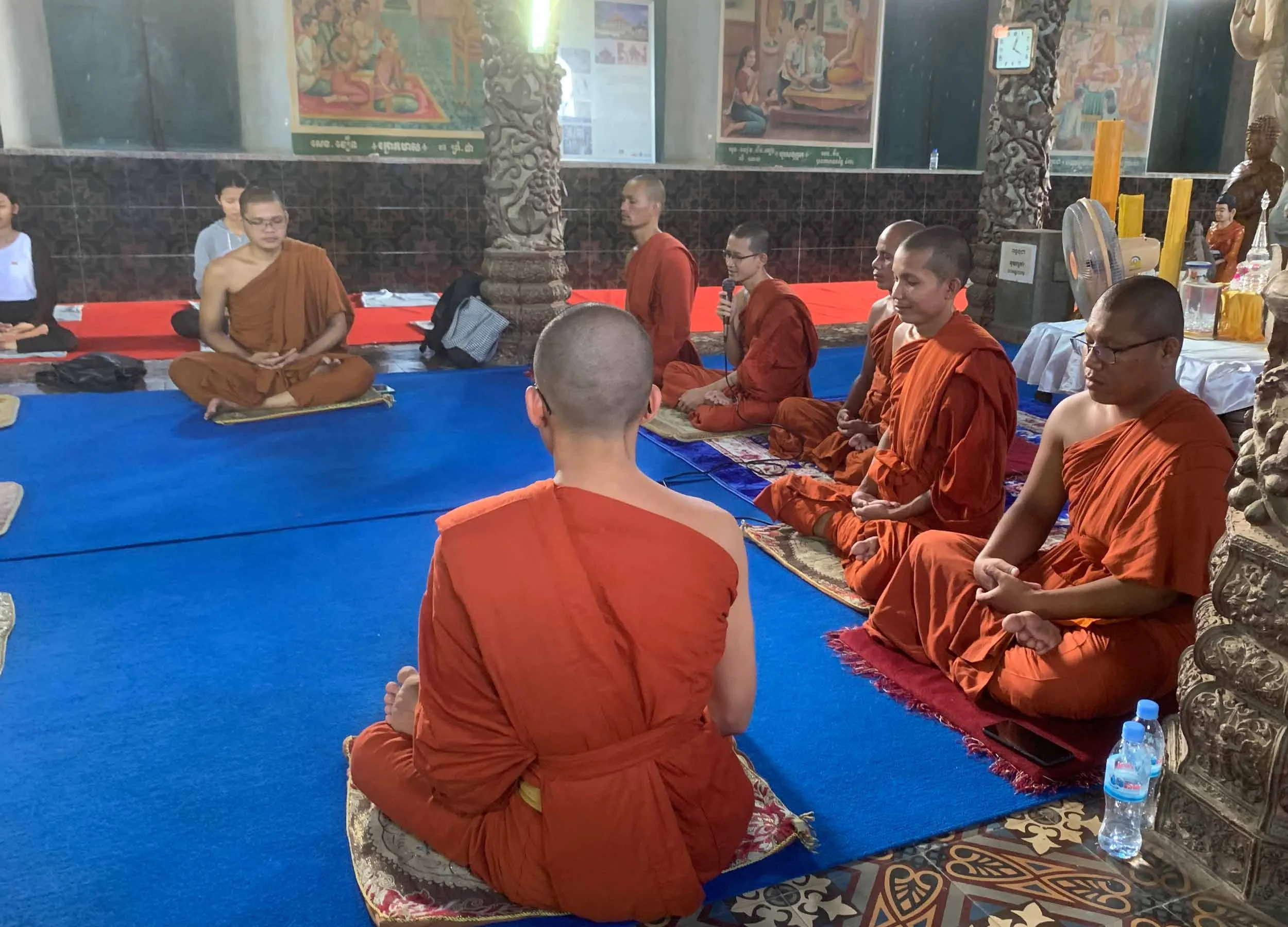
Common questions I receive from my guests and foreign friends include: "Are we allowed to enter the pagoda? Can I talk to a monk? Are women allowed to talk to monks?" These are all wonderful questions. To me, they show a deep sign of respect and a desire to avoid accidental mistakes in the local culture.
The answer to all of these questions is yes, you can. However, a few things might make it difficult, such as the language barrier and not knowing the local customs yet. Below, I want to share some helpful tips for your visit.
Things You Need to aware
The pagoda compound is entirely open to the public. Many locals use the pagoda grounds as a peaceful resting site where they can find a bench or a shade tree to relax before returning to work, or to rest if they are traveling. Just make sure that you take your hat off before entering the main pagoda compound.
Be mindful when you are near shrines, stupas, or any buildings whose purpose you might not recognize. These are sacred sites where locals come to worship throughout the year. A stupa is a monument used to house the remains or ashes of ancestors after cremation.
Most of the time, the buildings within the compound remain closed. This is done to keep valuable items and the Buddha statues safe and respected. If you are lucky enough to visit when the main temple is open, you are welcome to enter and pay your respects to the Buddha statue. When doing so, be sure to take your shoes off before stepping inside and keep your voice quiet. To answer the question, why do these temples not open all the time ? It is because they are living places of worship, not tourist attractions.
If you want to learn about monastic life and you want to talk to a monk, you can. Here are important notes about that.
Monk will not shake your hand, instead practice local gestures (put your palm together and have a lotus shape and place them above your nose and bowl a bit). When you do that, you should say the Khmer phrase “Thvia Bong Kum / Chum Reap Su”, which means Hollo in English.
Try to keep distance from the monk and always stand or sit lower than the monk.
Don’t touch the monk's shoulder or head. Not just the monk, touching someone's head is considered to be disrespectful in Cambodia overall
Asking questions are welcome but be mindful of inappropriate questions. Monks are happy to discuss culture, history and Buddhism philosophy.
One important note in case you want to make an offering, be sure that you hand them to the monk and he touches them all. Missing touches from the monk is considered not to be offered (monk cannot use that).
In Buddhism rule, the monk is not allowed to touch ladies so be sure that you always give space to the monk.
I hope this article offers valuable insights and provides a deeper window into Cambodian culture and Buddhist philosophy. Personally, I am often reminded of a traditional Khmer proverb: 'The empty grains of rice stand straight, but the fruitful ones bend low under the weight of their own nourishment.' In life, practicing mindfulness and humility creates endless opportunities to learn. Conversely, moving through the world with an ego-driven or rigid mindset only limits our ability to truly grow.